
Save the tooth or extract + implant
Root canal treatment cleans and seals an infected tooth; an implant route replaces a tooth after extraction with an implant-supported crown.
[1][2]The short answer
Root canal treatment keeps the tooth by removing infected pulp, while an implant replaces a tooth after it has been extracted.
[1][2]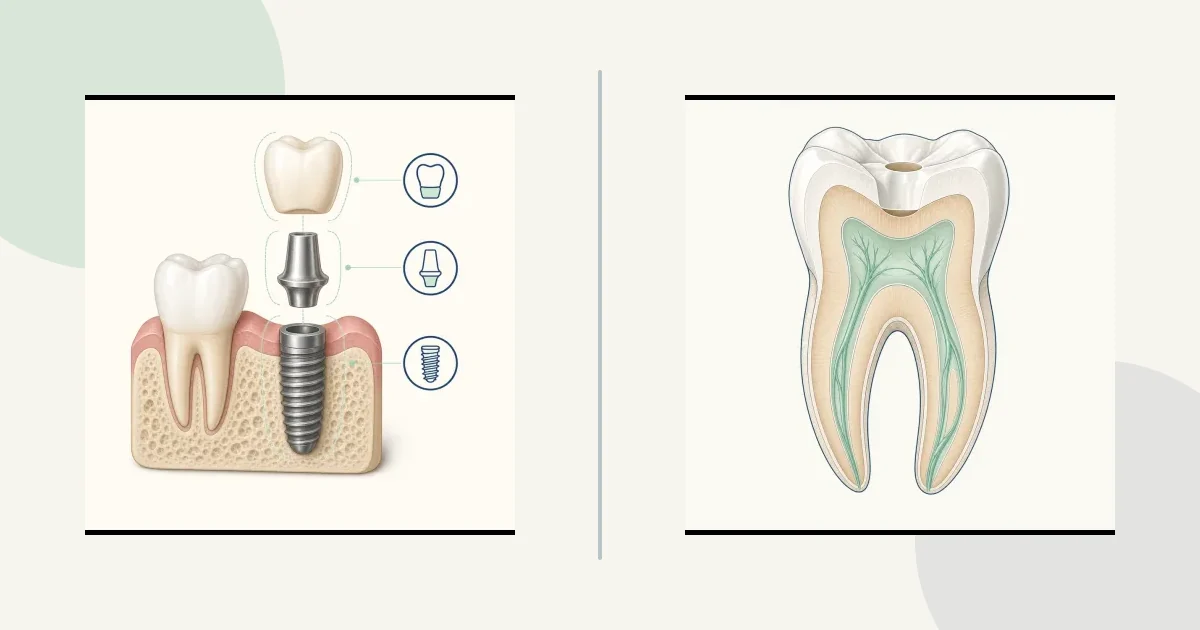
The two options, side by side
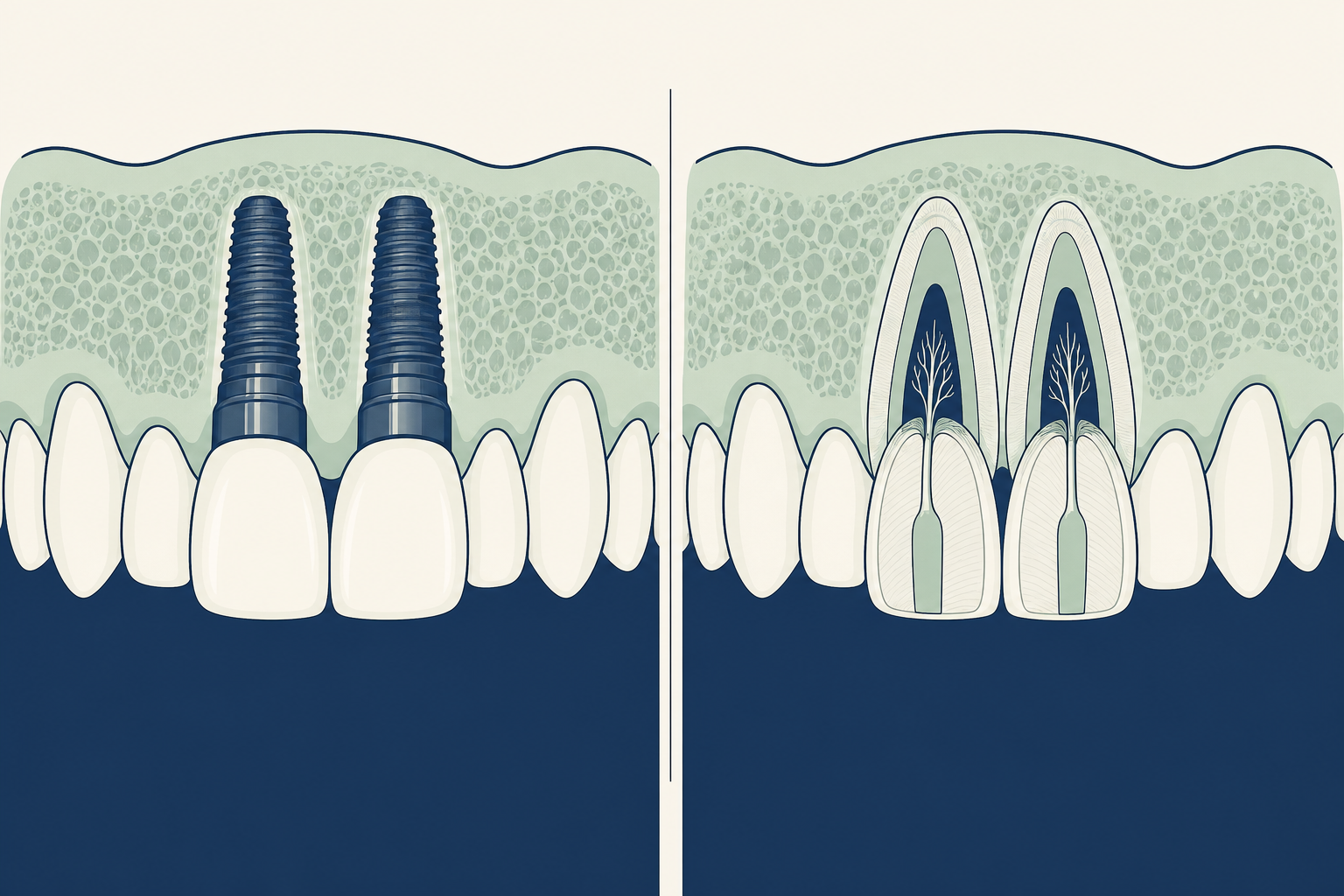
Should the tooth be kept or replaced?
| Question | Root canal route | Implant route |
|---|---|---|
| What happens to the tooth | Infected pulp is removed and the tooth is sealed. | The tooth is extracted and replaced with an implant-supported single crown.[1][2] |
| What the review compared | Root canal treatment and restoration. | Extraction followed by an implant-supported single crown.[2] |
When does root canal treatment address the problem?
When is an implant replacement route being compared?
An implant-supported single crown is compared after extraction, rather than as a way to clean infection from inside the existing tooth.
[2]What treatment steps differ most?
What does the long-term evidence show?
In the systematic review, long-term survival for implant-supported single crowns and root canal treatment with restoration was similar. Both had higher long-term survival than fixed partial dentures.
[2]What can happen after root canal treatment?
What is the third choice sometimes considered?
What separates these two routes?
The decision separates saving and restoring the existing tooth from extracting it and placing an implant-supported crown. These are different treatment sequences, even where long-term survival was similar in the review.
[2]