Dental Nation
Treatment comparison

When a filling stops being enough

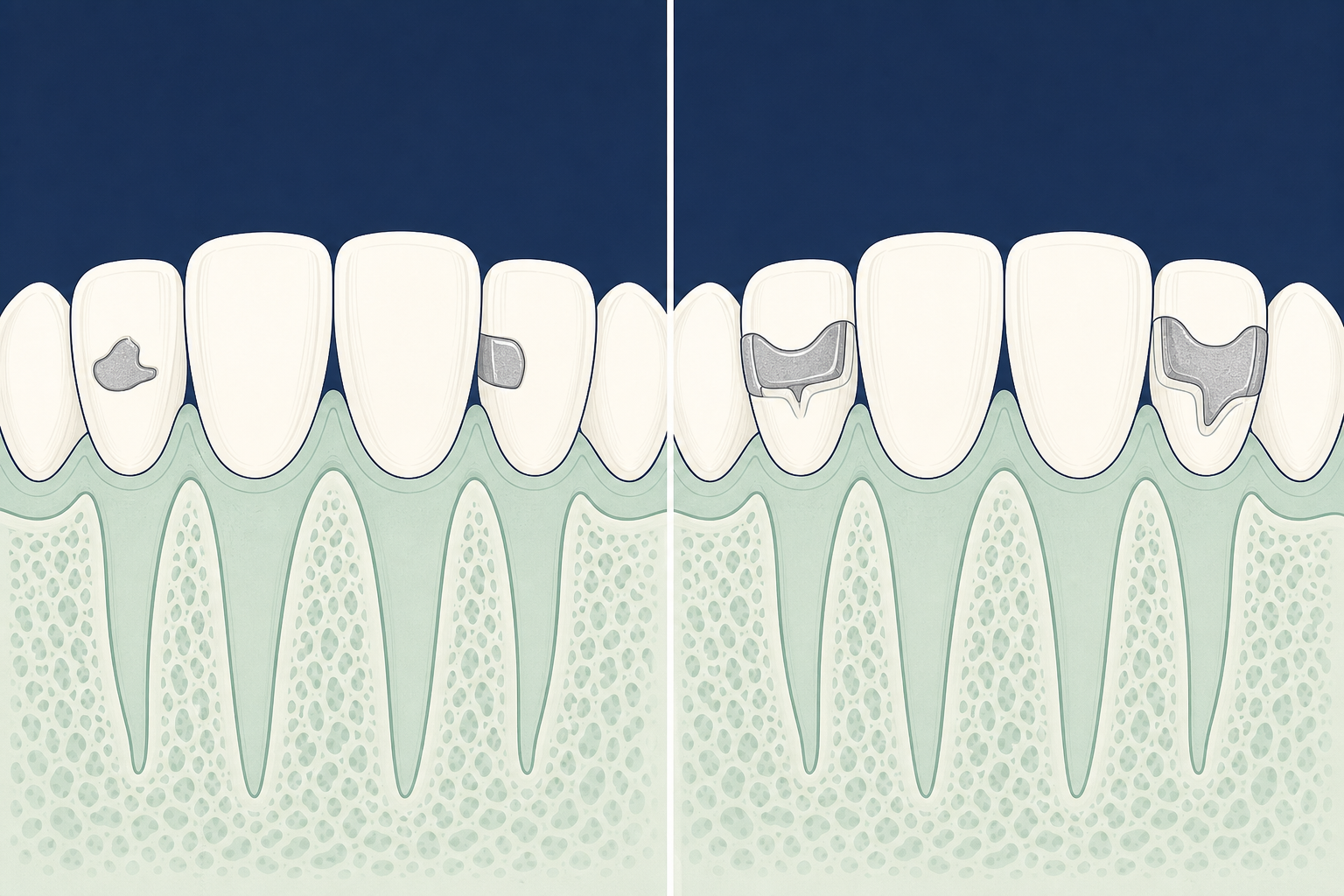
Fillings repair cavities; inlays and onlays are partial-coverage restorations.

[1][2]

The short answer

Fillings repair cavities, while inlays and onlays are partial-coverage restorations that can be considered before a tooth needs complete crown coverage.

[1][2]
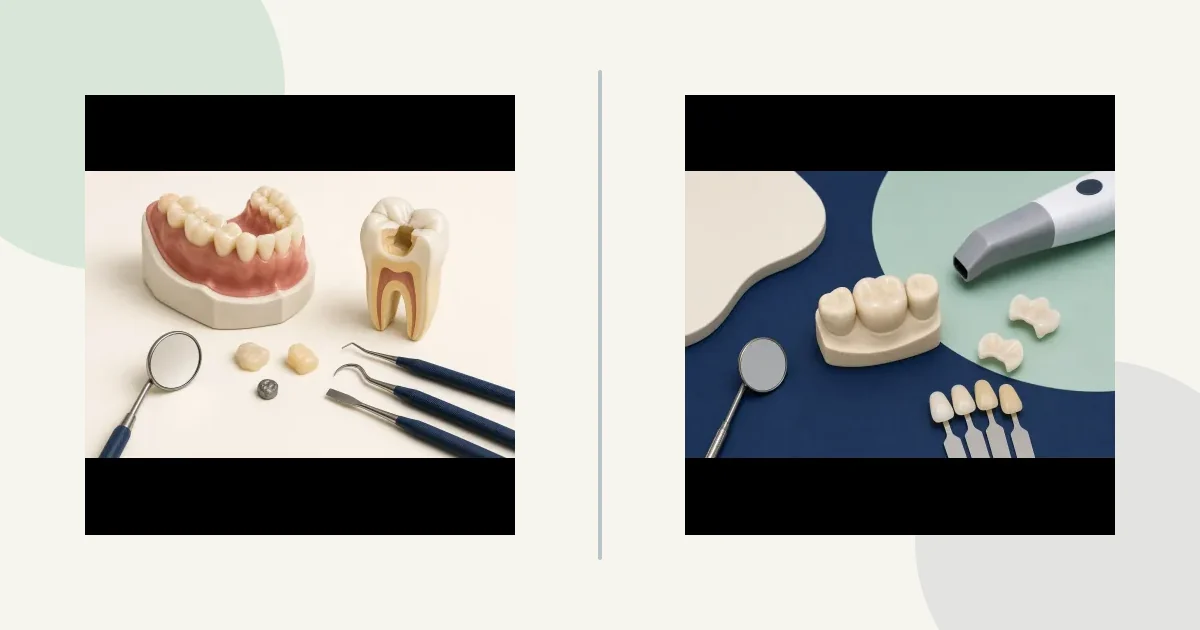
When a filling stops being enough comparison graphic

The two options, side by side

Illustrative diagram: dental fillings vs inlays onlays
Illustration — a representative diagram, not a patient photo.
The DN First Look799 AED
Book The DN First Look

When does a filling stop being enough?

Coverage options in the comparison
RestorationSupported distinction
FillingA filling repairs a cavity and may be tooth-coloured composite or silver-coloured amalgam.[1][2]
Inlay or onlayInlays and onlays are partial-coverage restorations.[1][2]

[1][2]

When does a filling fit?

A cavity can be repaired with a filling. Composite fillings are tooth-coloured, while amalgam fillings are silver-coloured.

[1][2]
Named filling materials
MaterialColour
CompositeTooth-coloured.[1][2]
AmalgamSilver-coloured.[1][2]

[1][2]

When does an inlay or onlay fit?

Inlays and onlays preserve partial coverage rather than covering the whole tooth. Gold, metal ceramic, all-ceramic, and zirconia materials can be used for partial as well as full-coverage restorations.

[1][2]

What changes the work involved?

The distinction is the amount of coverage: fillings repair cavities, inlays and onlays are partial coverage, and complete coverage restorations are used especially where tooth structure loss is more than 50%.

[1][2]

How long do they last?

A systematic review reported a mean survival rate of 90.89% for inlays. It also found that the available studies were too heterogeneous for a meaningful comparison between restoration types or materials.

[1][2]

What happens if decay is left untreated?

Repeated acid exposure can weaken enamel until it breaks down into a cavity. Untreated tooth decay can cause pain, infection, and tooth loss.

[1][2]

When is a crown the next option?

Complete coverage restorations are used extensively, especially when loss of tooth structure is more than 50%. Crowns can be made from gold, metal ceramic, all ceramic, or zirconia.

[1][2]

What should the decision weigh?

The central question is coverage. A filling repairs the cavity, an inlay or onlay restores part of the tooth, and a crown gives complete coverage when tooth structure loss is extensive.

[1][2]

Frequently asked questions

Are inlays and onlays the same as crowns?

Inlays and onlays are partial-coverage restorations. A crown is a complete-coverage restoration, used especially where more than half the tooth structure is lost.

[1][2]