
Bonding, whitening, or veneers
Whitening changes colour, bonding adds tooth-coloured filling material, and veneers cover the front surface of a tooth.
[1][2][3]The short answer
Whitening bleaches tooth colour, bonding uses tooth-coloured filling material, and veneers cover the front surface.
[1][2][3]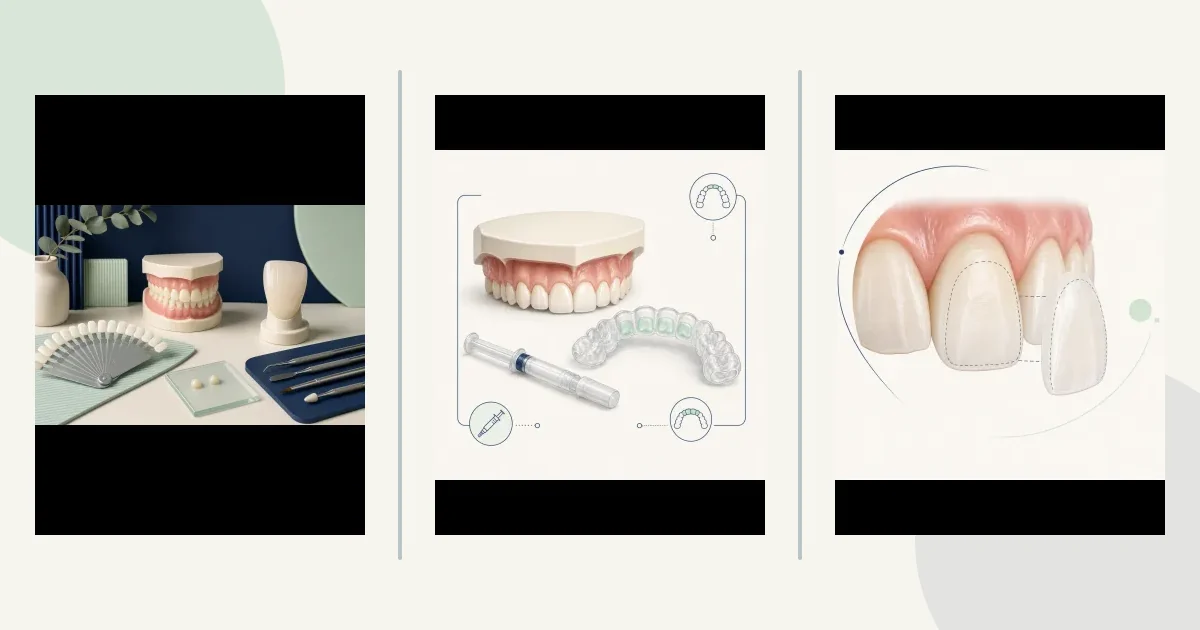
The two options, side by side
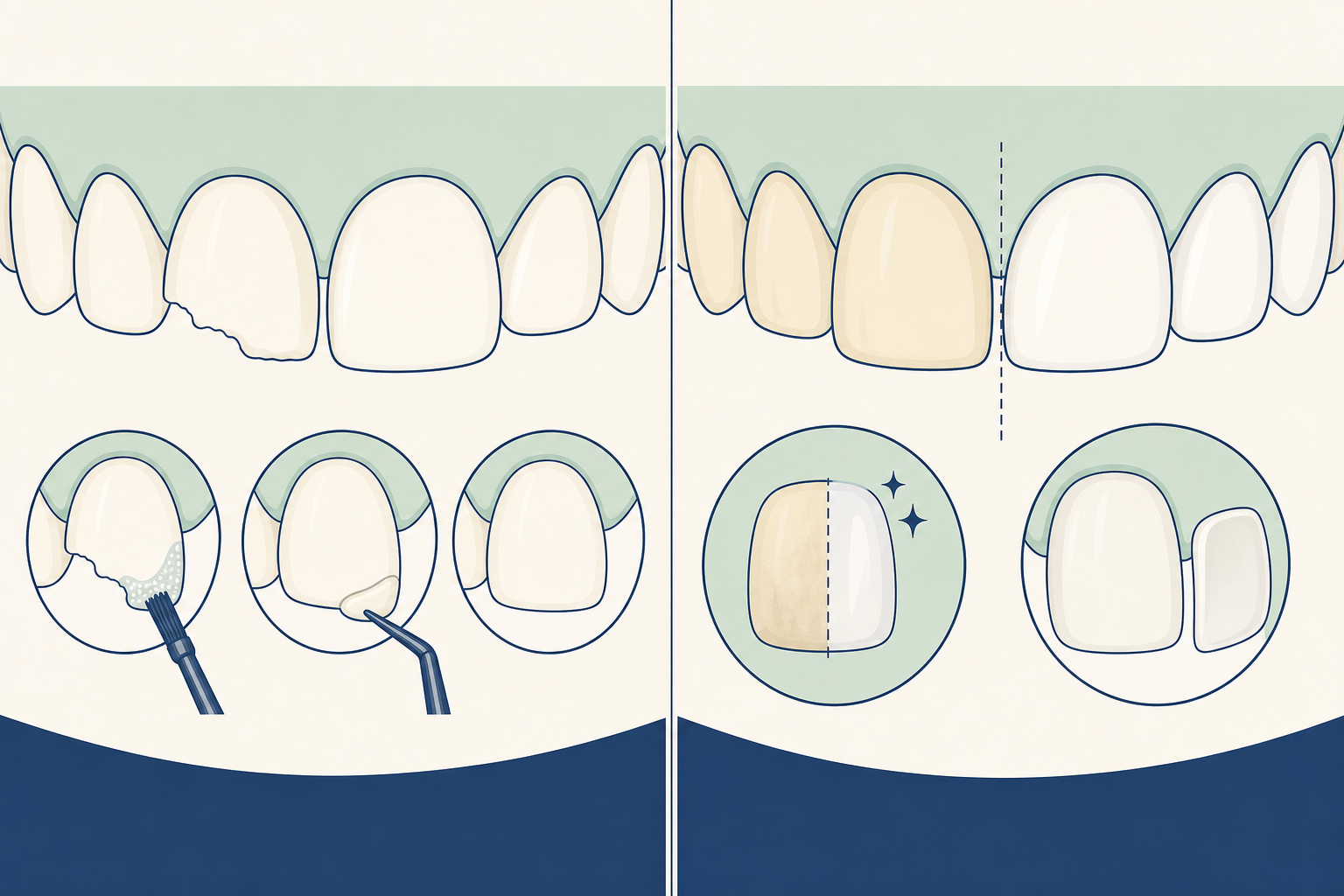
Which smile change are you seeking?
Choose whitening for colour
Choose bonding for a shaped surface
What changes the treatment choice?
The comparison is between bleaching, bonded filling material, and a bonded veneer covering, so the material and process differ before any quote is considered. Bleaching may be done in a clinic or at home with custom-fitted trays. Veneers use porcelain or composite and have a separate placement process, while bonding uses a tooth-coloured filling material on the tooth.
[1][2][3]What remains on the tooth?
What safety point matters?
Veneers should be placed by a licensed dentist because unlicensed services may carry infection and nerve-damage risks or cover unhealthy teeth. Porcelain placement includes removing a small amount of enamel, making an impression or digital model, checking fit and shape, then bonding the finished veneer to the tooth.
[3][1]When is a cosmetic procedure not the answer?
How should the options be separated?
Start with the change wanted: colour points to whitening, shape or small appearance changes point to bonding, and front-surface coverage points to veneers. Whitening is available as in-office bleaching or home treatment with custom-fitted trays and professional-strength gel. A veneer is a bonded cover, whereas bonding places tooth-coloured filling material directly on the tooth.
[1][2][3]