Dental Nation
Treatment comparison

Coverage extent for damaged front teeth

Veneers cover the front of a tooth, while crowns can need care around their margins and may later require root canal treatment.

[3][2]

The short answer

Veneers are thin coverings on the front of teeth, while crowns need careful plaque control around the gum margin and can sometimes require root canal treatment.

[3][2]
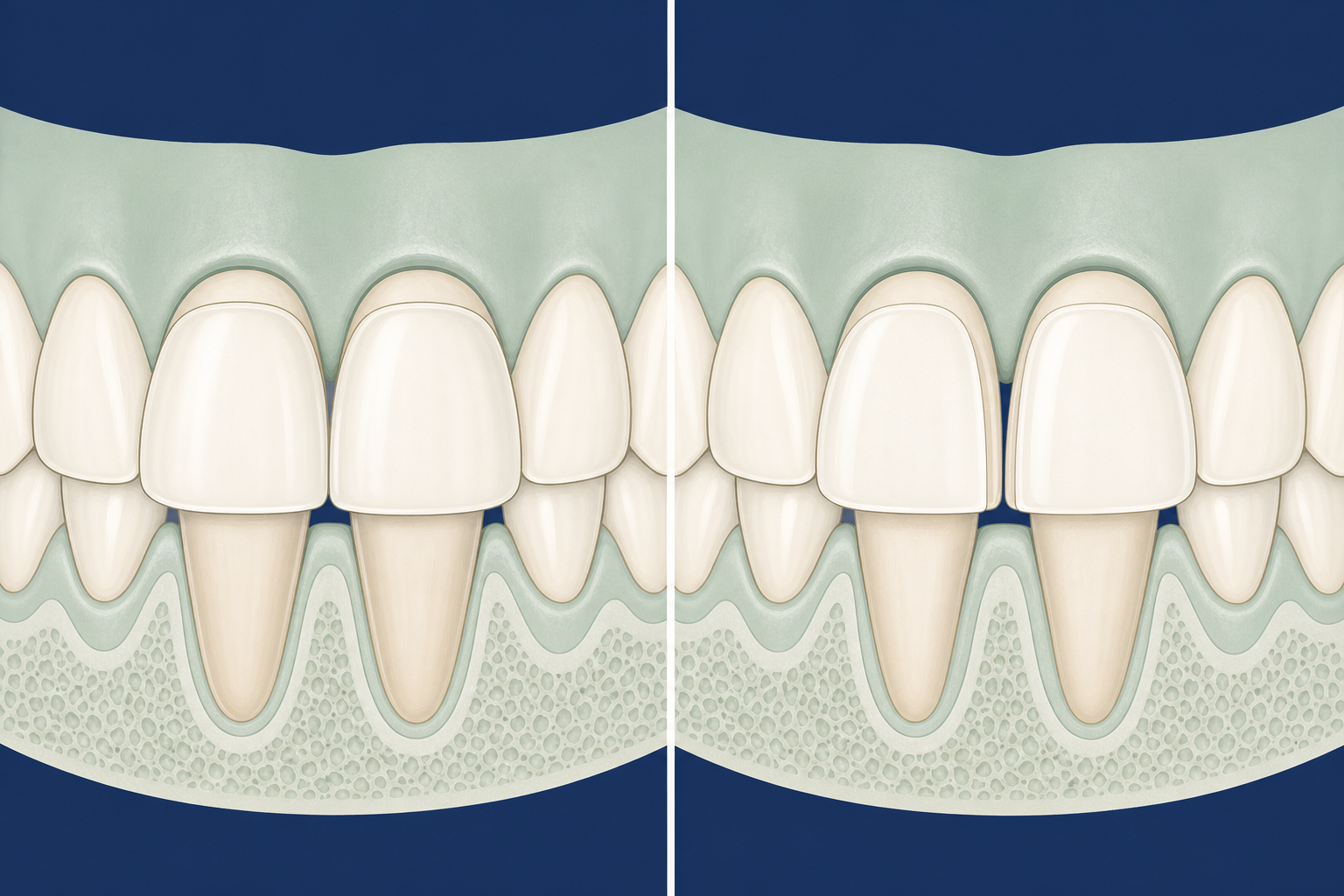
Coverage extent for damaged front teeth comparison graphic

The two options, side by side

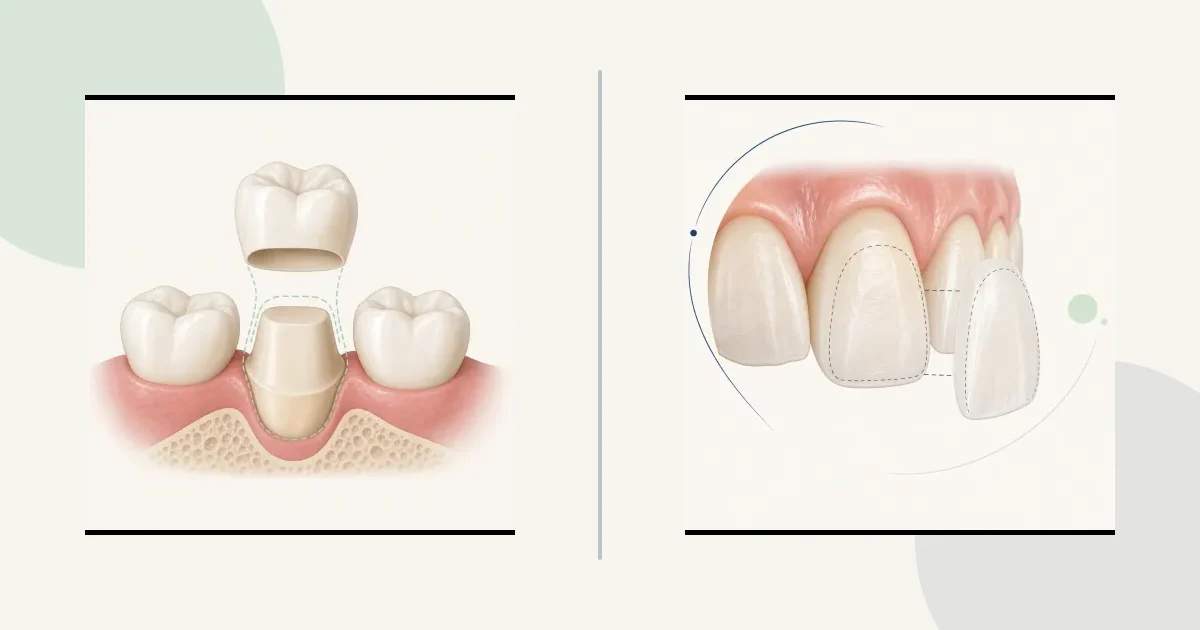
Illustrative diagram: crowns vs veneers
Illustration — a representative diagram, not a patient photo.
The DN Glow Up1,699 AED
Book The DN Glow Up

What does each restoration cover?

Restoration characteristics relevant to front teeth
RestorationKnown characteristicCare point
Porcelain veneerThin shell fitted to the front tooth surfaceCan chip, crack, wear down, or loosen[3][2]
CrownGum margin can be sensitive to plaque build-upMeticulous oral hygiene is needed[3][2]

[3][2]

When does a veneer change the front surface?

A porcelain veneer is a custom thin shell placed on the front surface of a tooth. A composite veneer is tooth-coloured filling material bonded to the tooth and may need less enamel removal.

[1][3]

When does crown care become part of the decision?

A small percentage of teeth receiving crowns, veneers, or bridges may need root canal treatment. This is commonly identified before permanent cementation, though symptoms can also develop months or years later.

[3][2]

Which veneer material affects cost and repair?

Porcelain veneers are strong, long-lasting and tend to cost more. Composite veneers are easier to repair when damaged, but do not resist staining or wear as well as porcelain.

[1][3]
Porcelain and composite veneer trade-offs
MaterialBenefitLimitation
PorcelainStrong and long-lastingUsually the more expensive option[1][3]
CompositeMay require fewer visits and is easier to fixLess stain-resistant and wear-resistant[1][3]

[1][3]

What affects how long restorations last?

Diet, oral hygiene, cleaning between teeth, smoking, daily wear, and tooth grinding affect how long crowns, veneers, and bridges last. Plaque around crown margins can cause gum bleeding.

[3][2]

What appearance changes can occur?

Thin gums can occasionally recede and expose a darker root surface or restoration margin. Bleaching natural teeth does not change porcelain crowns, so the colours may no longer match.

[3][2]

When is neither cosmetic covering the answer?

A veneer should not be placed over unhealthy teeth because infection and nerve damage are possible when treatment is provided by an unlicensed person or disease is missed. Decay and gum disease need treatment first.

[3][2]

What details guide the restoration choice?

The choice examines the tooth surface to be covered, the amount of enamel that can be removed, gum condition, plaque control, and whether porcelain or composite has the needed balance of repairability and stain resistance.

[1][3]

Frequently asked questions

Can a tooth with a crown need root canal treatment later?

Yes. Symptoms may arise months or years after crown treatment, and root canal treatment may then be performed through the crown or after removing it.

[3][2]