Dental Nation
Treatment comparison

Same-day (CEREC) vs lab-made

A lab-made crown commonly takes two visits with an impression and temporary crown; chairside and laboratory CAD/CAM crowns are compared for shape, bite.

[1][2]

The short answer

Lab-made crowns commonly use two visits, an impression, laboratory work, and a temporary crown, while chairside CAD/CAM crowns follow a digital fabrication route.

[1][2]
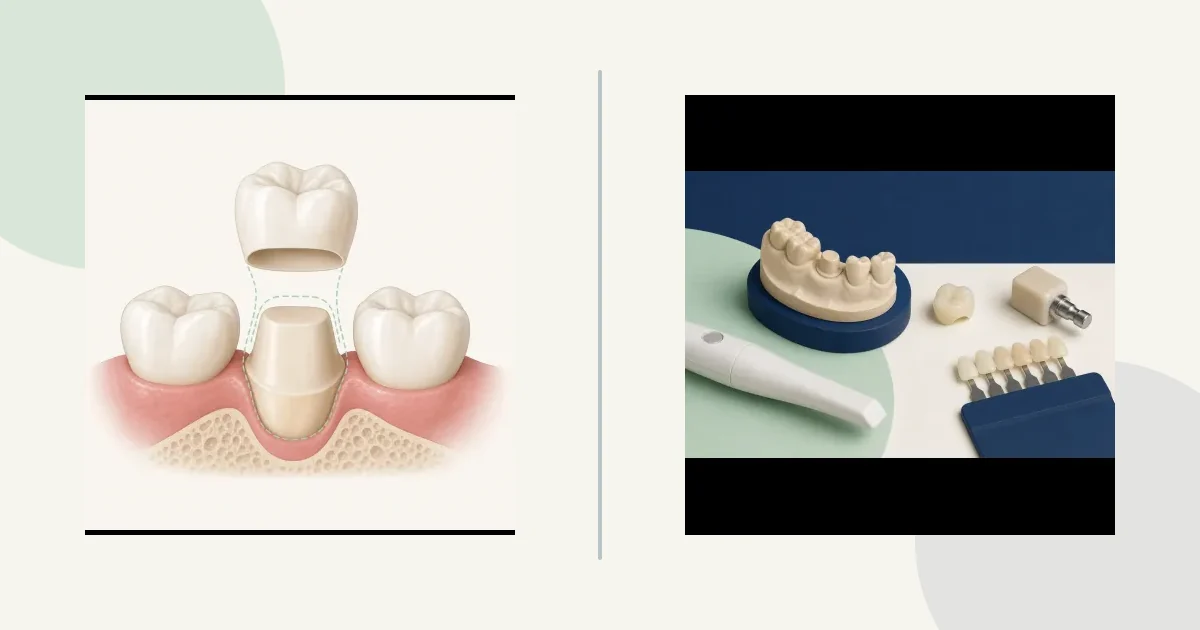
Same-day (CEREC) vs lab-made comparison graphic

The two options, side by side

Illustrative diagram: crowns vs same day crowns
Illustration — a representative diagram, not a patient photo.
The DN First Look799 AED
Book The DN First Look

What changes between same-day and lab-made crowns?

Fabrication routes named in the evidence
RouteDocumented feature
Lab-made crownThe first visit includes tooth reshaping, an impression for the laboratory, and a temporary crown.[1][2]
Chairside CAD/CAM crownChairside and laboratory CAD/CAM crowns have been compared for morphology, occlusion, and aesthetics.[1][2]

[1][2]

When does a lab-made crown fit?

A conventional crown usually takes two visits. At the first visit, the tooth is reshaped, an impression is sent to the laboratory, and a temporary crown protects the tooth until the next stage.

[1][2]
First appointment for a conventional crown
StepPurpose
Reshape the toothCreates the form for the crown.[1][2]
Temporary crownProtects the tooth after the impression is taken.[1][2]

[1][2]

When does a same-day digital route fit?

A chairside CAD/CAM crown is made through a digital workflow rather than the conventional laboratory sequence. Comparative work has examined chairside and laboratory CAD/CAM crowns for morphology, bite, and appearance.

[1][2]

What changes the work involved?

The conventional route includes an impression, laboratory preparation, and a temporary crown during the first visit. A chairside CAD/CAM route changes the fabrication method, while both are crown treatments.

[1][2]

How long do crowns last?

Lithium disilicate full-coverage crowns have been studied for recurrent caries, pulpal involvement, postoperative sensitivity, and periodontal changes. Most studies in the review reported none of those outcomes.

[1][2]

What can go wrong?

Microorganism infiltration, recurrent caries, pulpal lesions, periodontal inflammation, and cement exposure to the oral environment can lead to failure of lithium disilicate crown restorations over time.

[1][2]

When might neither crown route be needed?

Full-coverage crowns are one type of restoration. The reviewed lithium disilicate studies compared them with other full-coverage materials, including zirconia, full metal, and porcelain-fused options.

[1][2]

What should the choice weigh?

Separate the fabrication route from the crown material. The lab-made route is defined by impressions and laboratory work, whereas material studies track outcomes such as recurrent caries, sensitivity, and periodontal change.

[1][2]

Frequently asked questions

Does a lab-made crown always require a temporary crown?

In the usual two-visit crown process, a temporary crown is made and cemented after the tooth is reshaped and the impression is sent to the laboratory.

[1][2]