Dental Nation
Treatment comparison

How much tooth structure decides

Fillings repair cavities, while crowns repair badly broken-down teeth and usually require reshaping, an impression, laboratory work, and a temporary crown.

[1][2]

The short answer

A filling repairs a cavity, while a crown is used to repair a badly broken-down tooth and covers a more extensive restoration route.

[1][2]
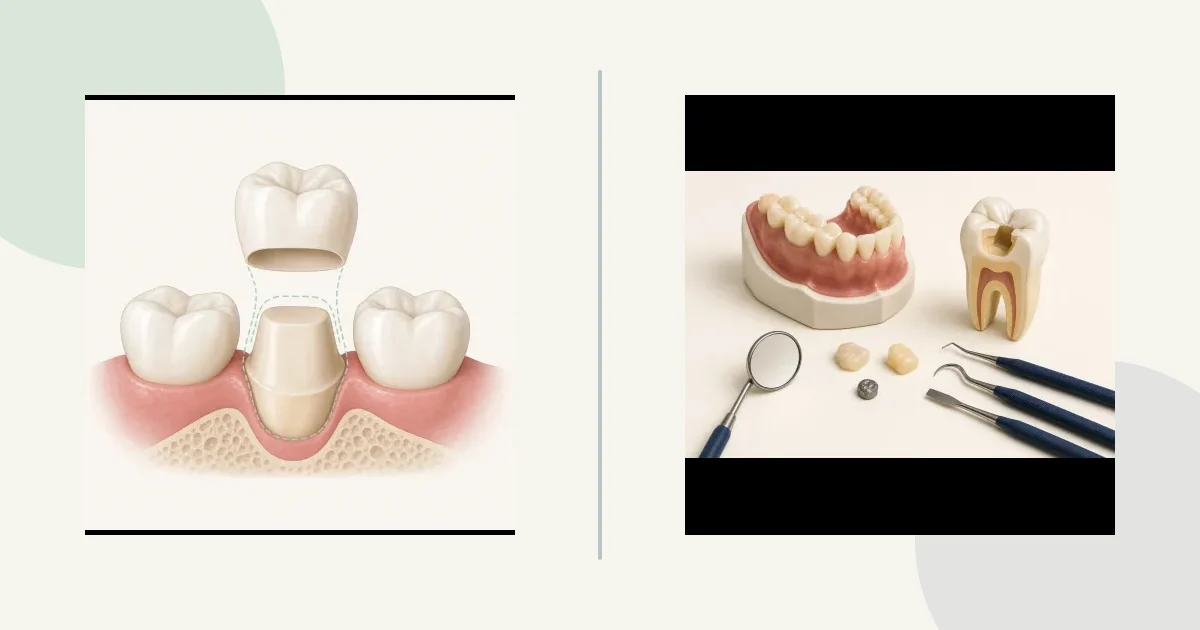
How much tooth structure decides comparison graphic

The two options, side by side

Illustrative diagram: crowns vs dental fillings
Illustration — a representative diagram, not a patient photo.
The DN First Look799 AED
Book The DN First Look

When does tooth structure change the answer?

How the restoration routes differ
OptionSupported use or step
FillingSeveral filling materials repair cavities, including tooth-coloured composite and silver-coloured amalgam.[1][2]
CrownCrowns repair badly broken-down teeth and can be made from porcelain, metals, or stainless steel for baby teeth.[1][2]

[1][2]

When can a filling do the job?

A filling is used to repair a cavity. Composite is tooth-coloured and is increasingly used, while amalgam is silver-coloured.

[1][2]
Filling materials named for cavity repair
MaterialAppearance
CompositeTooth-coloured.[1][2]
AmalgamSilver-coloured.[1][2]

[1][2]

When does a crown do more?

A crown is used for a badly broken-down tooth. The first crown visit usually includes reshaping the tooth, taking an impression for the laboratory, and cementing a temporary crown.

[1][2]

What changes the work involved?

The crown route usually takes two visits and involves a laboratory impression and a temporary crown. Those are treatment steps beyond placing a filling material to repair a cavity.

[1][2]

How long do fillings and crowns last?

Dental fillings and crowns do not last for life and may need replacement. Keeping natural tooth structure where possible is part of the restorative decision.

[1][2]

What happens if decay progresses?

Repeated acid exposure can weaken enamel until it breaks down into a cavity. Untreated decay can lead to pain, infection, and tooth loss.

[1][2]

When might neither be the first answer?

Early decay can show as a white spot where minerals have been lost. At that stage, enamel can repair itself with minerals from saliva and fluoride toothpaste or fluoride applied by a dental professional.

[1][2]

What should the decision weigh?

The practical dividing line is whether the tooth has a cavity that can be repaired with a filling or is badly broken down and needs a crown. A crown also requires tooth reshaping and laboratory preparation.

[1][2]

Frequently asked questions

Can a white filling replace a crown?

A tooth can sometimes be rebuilt with a white filling material that bonds to enamel, but crowns are used for badly broken-down teeth.

[1][2]

Sources used for this guide

  1. CrownsLeeds Teaching Hospitals NHS Trust · 2026-07-21
  2. Dental Fillings InformationNational Institute of Dental and Craniofacial Research · 2026-07-21