Dental Nation
Treatment comparison

Filling, inlay/onlay, or crown

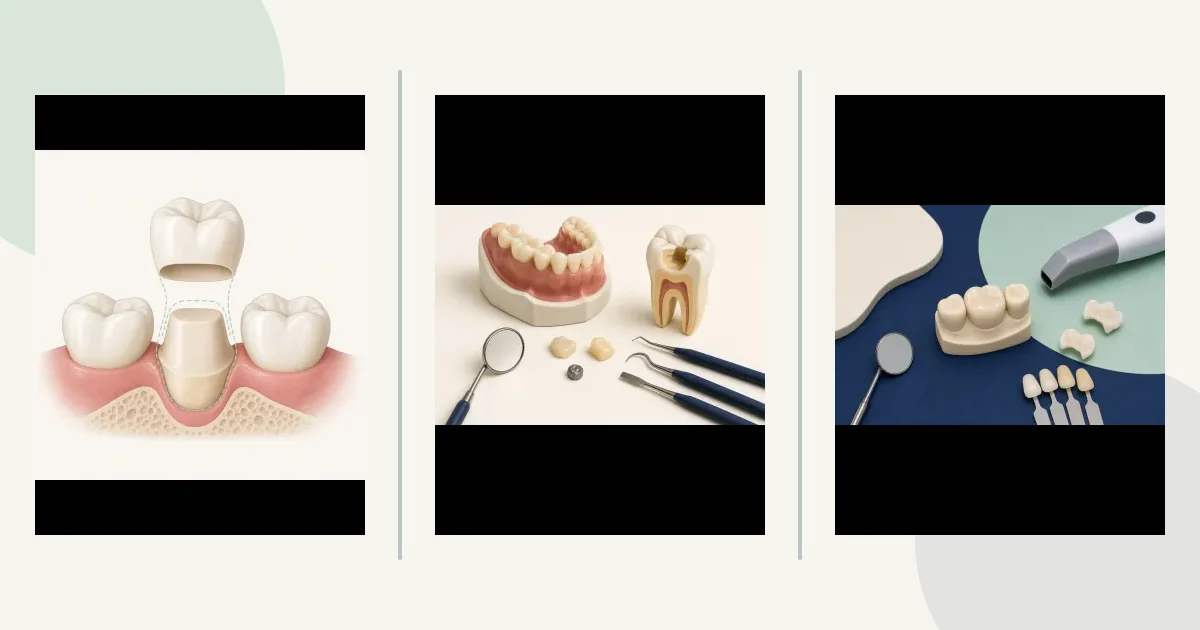
A crown covers a badly weakened tooth, while an inlay or onlay preserves more of the tooth around a repair.

[2]

The short answer

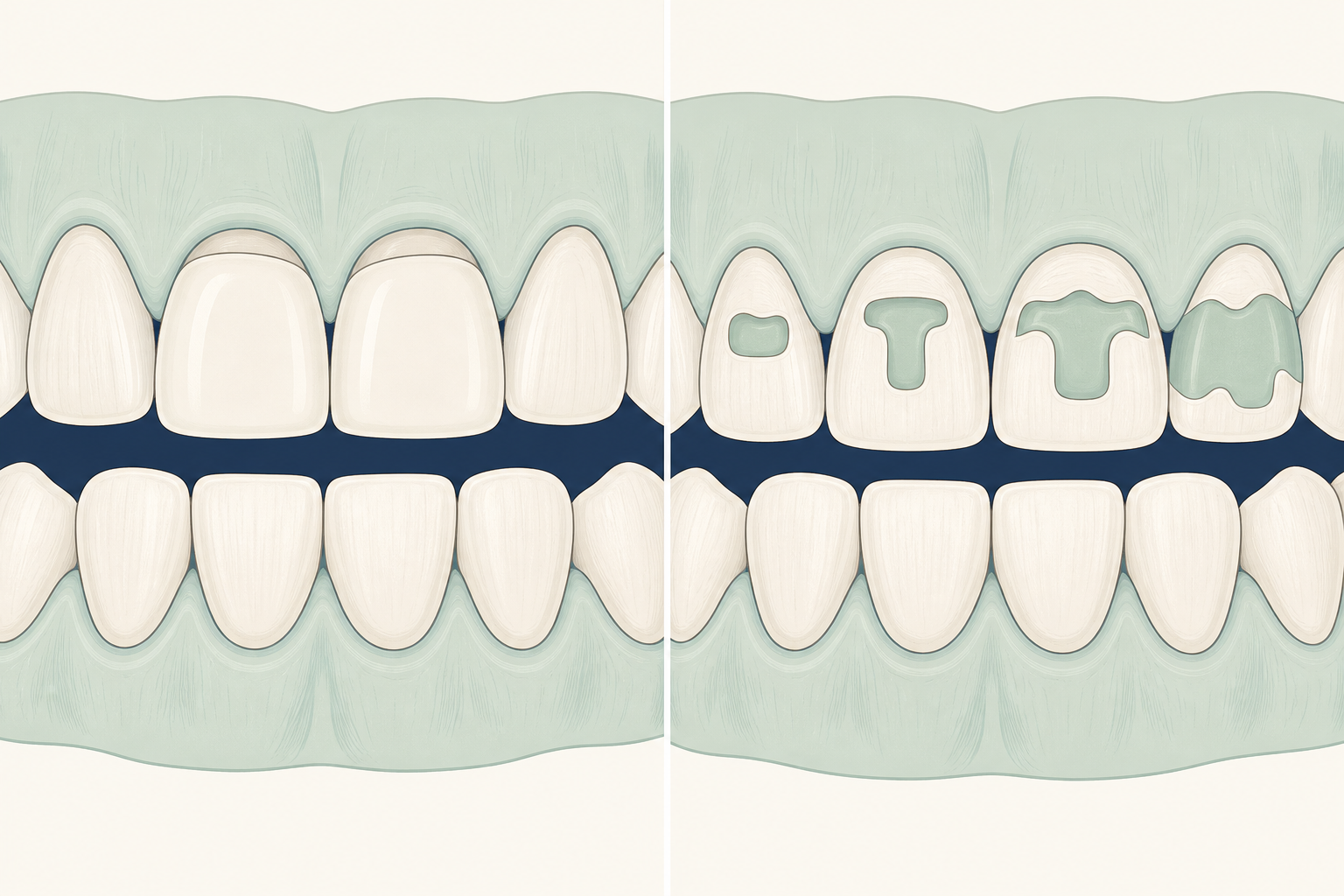
A filling repairs a small area, an inlay or onlay replaces part of a tooth, and a crown covers it completely when more structure is lost.

[2]
Restoration-extent master page comparison graphic

The two options, side by side

Illustrative diagram: crowns vs dental fillings vs inlays onlays
Illustration — a representative diagram, not a patient photo.
The DN First Look799 AED
Book The DN First Look

Which option fits the tooth?

How the restorations differ
OptionCoverageUseful distinction
FillingLocal repairRepairs a local area of a tooth[1][2]
Inlay or onlayPartial coverageAn onlay extends over more of the tooth than an inlay[2]
CrownComplete coverageOften used when more than half the tooth structure is lost[1][2]

[1][2]

Choose a filling, inlay, or onlay if

An inlay or onlay restores only part of the tooth. In the studies, people received the restoration type needed for their tooth, so partial coverage and a crown were not interchangeable labels for the same repair.

[1][2]

Choose a crown if

A crown is commonly used when tooth-structure loss exceeds 50%. The review includes gold, metal-ceramic, all-ceramic, and zirconia crowns as complete-coverage material options.

[1][2]

How do the costs differ?

The type of restoration is one reason treatment costs differ. In the NHS system, adults usually contribute toward treatment costs, which are organised by cost band; some circumstances qualify for free care.

[1][2]

How long can they last?

Published survival figures depend on the study and follow-up period. One comparison reported 95.30% for inlays, 97.00% for onlays, and 96.10% for crowns; at five years another reported 98.90% for inlays and onlays and 97.40% for crowns.

[2]
Reported survival figures
RestorationReported figure
Inlay95.30% in one comparison; 98.90% with onlays in another[2]
Onlay97.00% in one comparison[2]
Crown96.10% in one comparison; 97.40% at five years in another study[2]

[2]

What can go wrong?

Partial and complete restorations can fracture or chip, lose retention, develop recurrent decay, or have endodontic complications. In all-ceramic restorations, severe staining at the margin can occur; crown reports also included core failure.

[2]

When might none of these be enough?

An implant is a fixed alternative to a removable denture and can replace one tooth or several teeth. It uses a titanium screw in the jaw to support a crown, bridge, or denture, rather than restoring the original tooth.

[1][2]

What guides the choice?

The remaining tooth structure, tooth history, position in the mouth, caries measures, and periodontal measures can all affect survival. In the reviewed evidence, anterior teeth had higher survival rates than posterior teeth.

[1][2]

Frequently asked questions

Does an onlay cover more tooth than an inlay?

Yes. Both are partial restorations, but an onlay extends over more of the tooth than an inlay.

[2]
What replaces a tooth that cannot be restored?

An implant can replace one or more teeth and is a fixed alternative to a removable denture.

[1][2]