
Nerve-proximate lower wisdom teeth
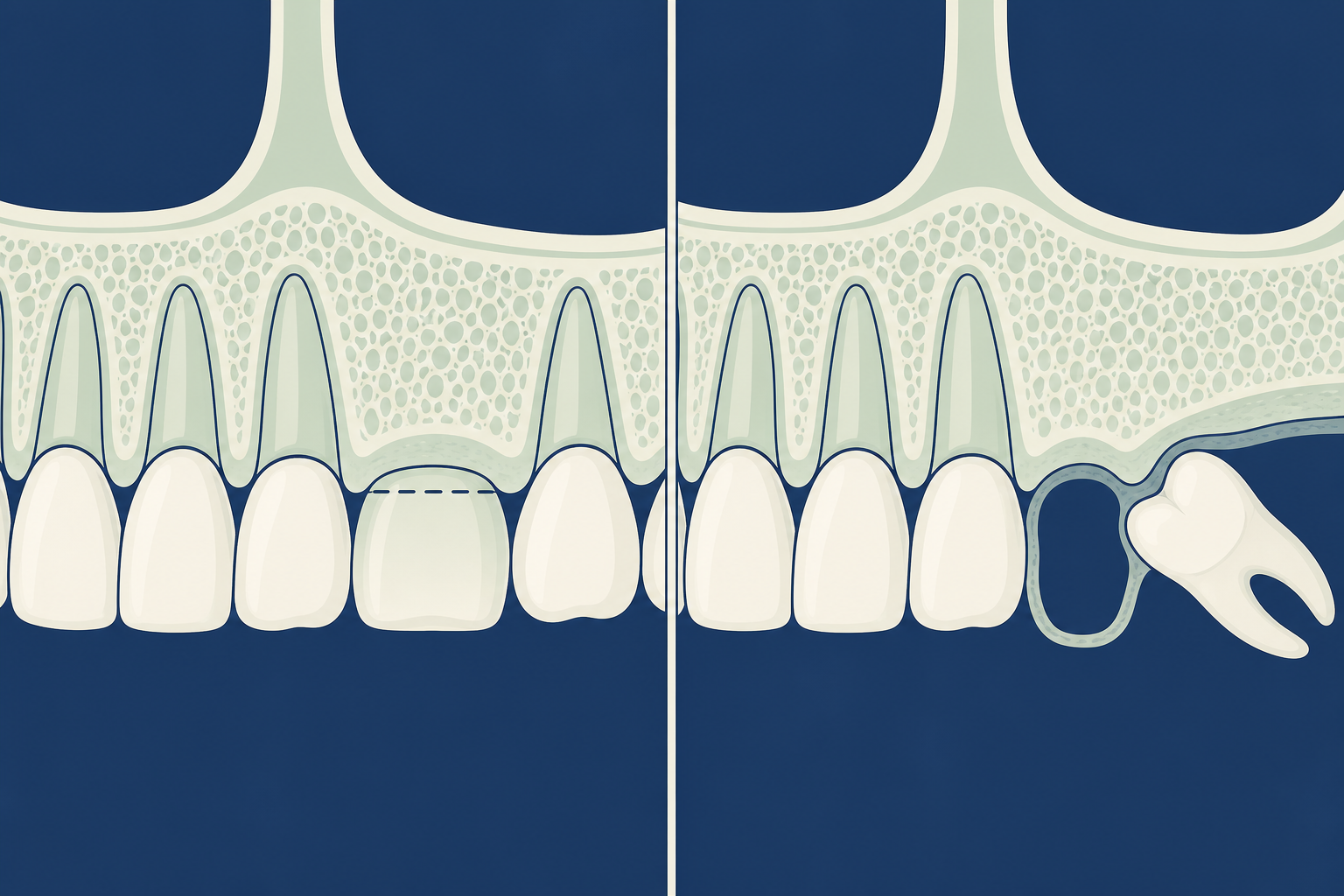
Coronectomy removes a lower wisdom tooth’s crown but leaves roots close to an important jaw nerve in place.
[2]The short answer
Coronectomy removes the crown of a lower wisdom tooth and leaves roots in place when they are very close to important nerves.
[2]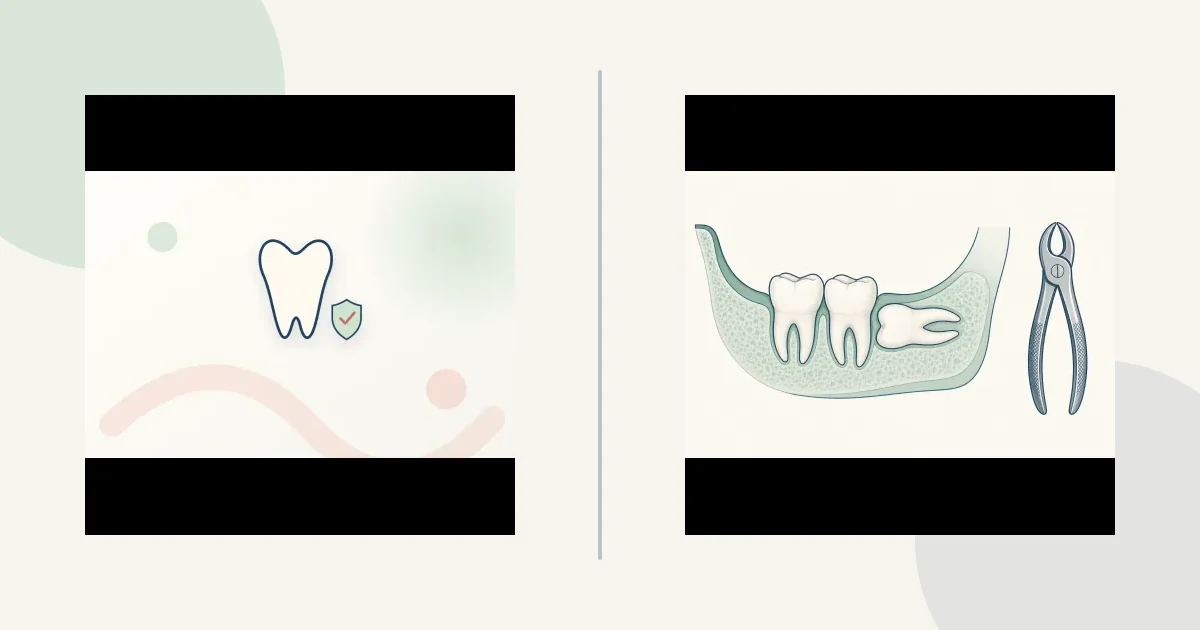
The two options, side by side
What is the difference between coronectomy and extraction?
When can coronectomy be considered?
Coronectomy can be considered when the lower wisdom tooth roots are very close to important nerves in the lower jaw. Leaving the roots may reduce the risk of injury to nerves that supply feeling in the lip, chin, gums, and teeth.
[2]When is full removal the comparison point?
Full removal is the comparison when a lower wisdom tooth requires treatment. The relevant question is whether removing the whole tooth places the inferior alveolar nerve at higher risk.
[1]What investigation can shape the procedure?
A two-dimensional X-ray checks the position of the wisdom tooth and nerve. If they are very close, a cone-beam CT scan can provide detailed three-dimensional information for choosing an option.
[2]What remains after a coronectomy?
The retained part is the root portion of the wisdom tooth. The crown, which is the upper part, is the part removed during coronectomy.
[2]What nerve-related problem is being avoided?
When is this comparison not the whole decision?
The tooth position, its relationship with the nerve, and the imaging findings determine whether either surgical option is suitable. A scan can clarify that relationship.
[2]How is the choice made?
The decision focuses on whether the lower wisdom tooth is close to the inferior alveolar nerve and whether complete removal raises the risk of nerve damage. The review specifically compares these approaches for lower third molars at high risk of inferior alveolar nerve injury.
[1]