
Treatment comparison
The core veneer material decision
Porcelain is stronger and more stain-resistant, while composite usually needs less enamel removal and fewer visits.
[1][2]The short answer
Porcelain veneers are custom shells that are stronger, longer-lasting and usually more expensive, while composite veneers can need less enamel removal and fewer visits.
[1][2]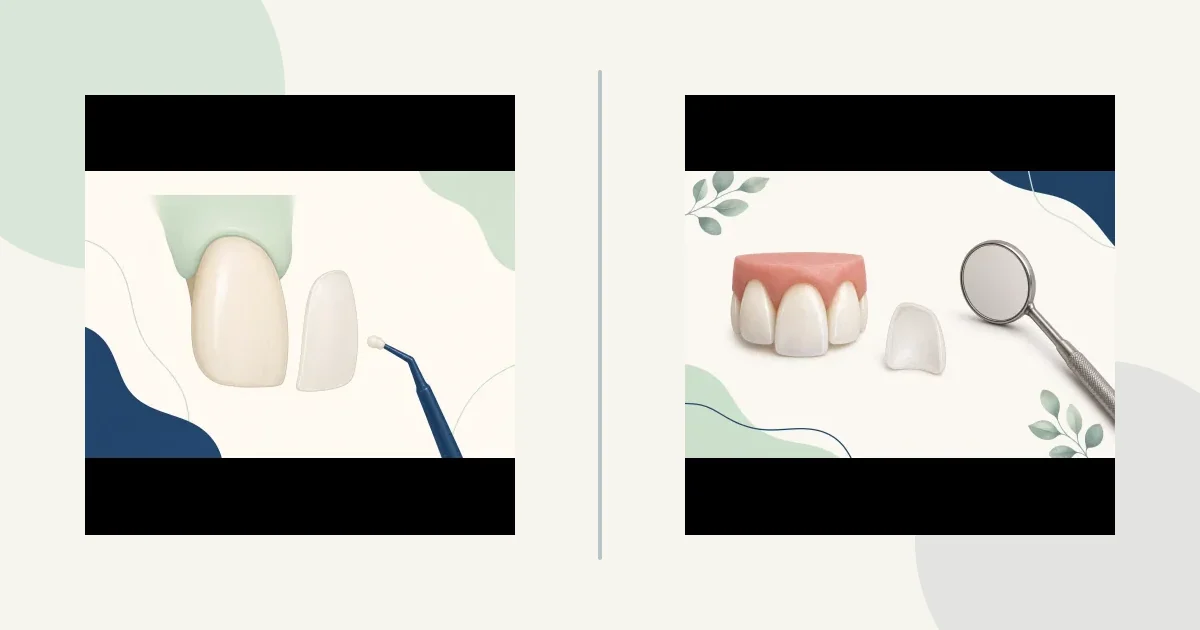
The two options, side by side
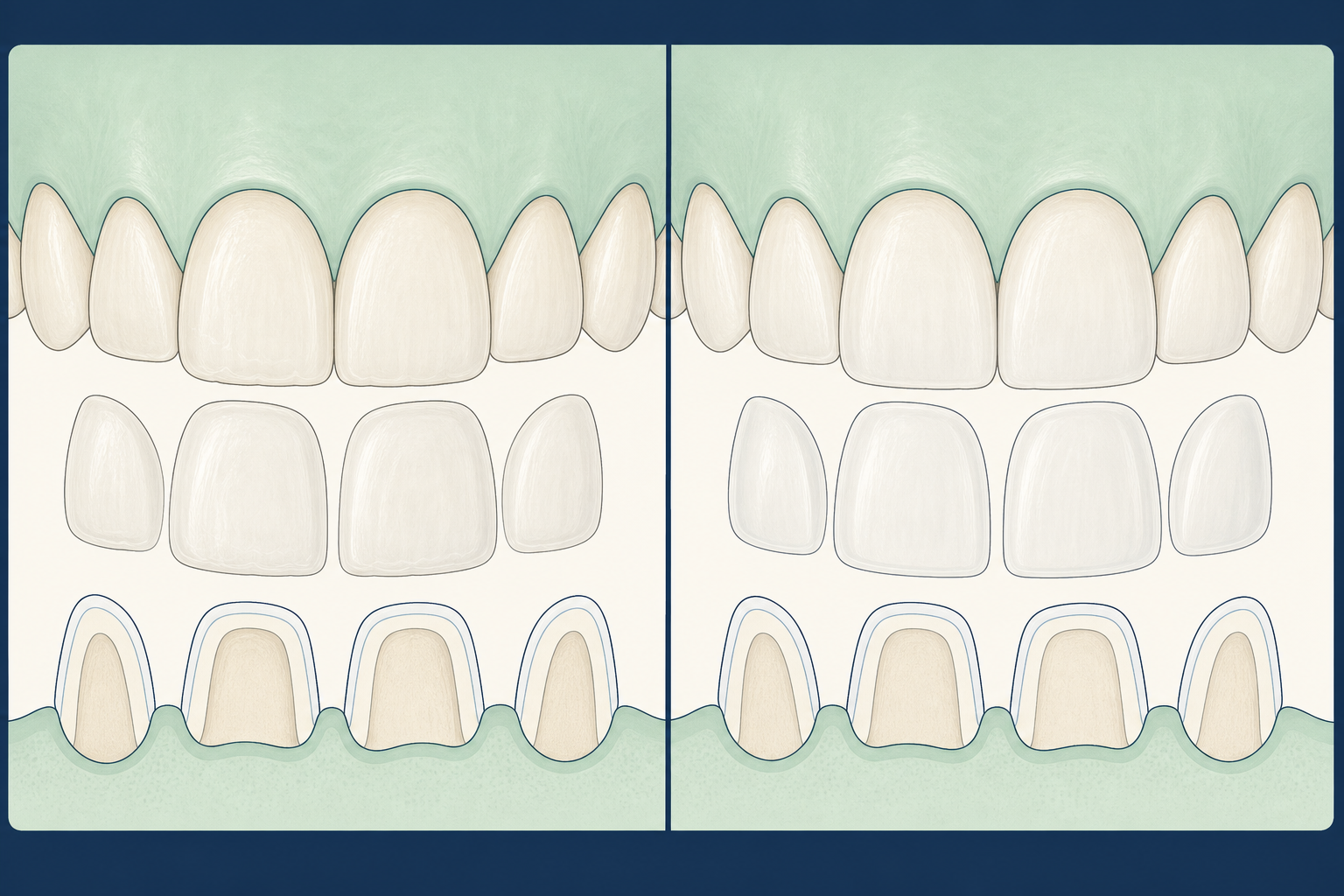
The DN Glow Up1,699 AED
Book The DN Glow UpWhich veneer material changes the decision?
| Option | What the material changes |
|---|---|
| Porcelain | A thin custom-made shell placed on the front surface of a tooth; it is strong, long-lasting and tends to cost more.[1][2] |
| Composite | A tooth-coloured filling material bonded to the tooth; it may need less enamel removal and fewer dental visits.[1][2] |
When does porcelain fit the priority?
When does composite fit the priority?
Which option tends to cost more?
How do wear and maintenance differ?
Composite is easier to repair when damaged, yet it is less stain-resistant and less wear-resistant than porcelain. Dental bonding can chip over time; oral habits and the number of teeth treated affect how long it lasts.
[1][2]| Material | Relevant maintenance point |
|---|---|
| Composite | It typically lasts three to 10 years before touch-up or replacement and can be repaired more easily if damaged.[1][2] |
| Porcelain | It is more stain- and wear-resistant, but a veneer can still chip, crack, wear down or loosen over time.[1][2] |