
Treatment comparison
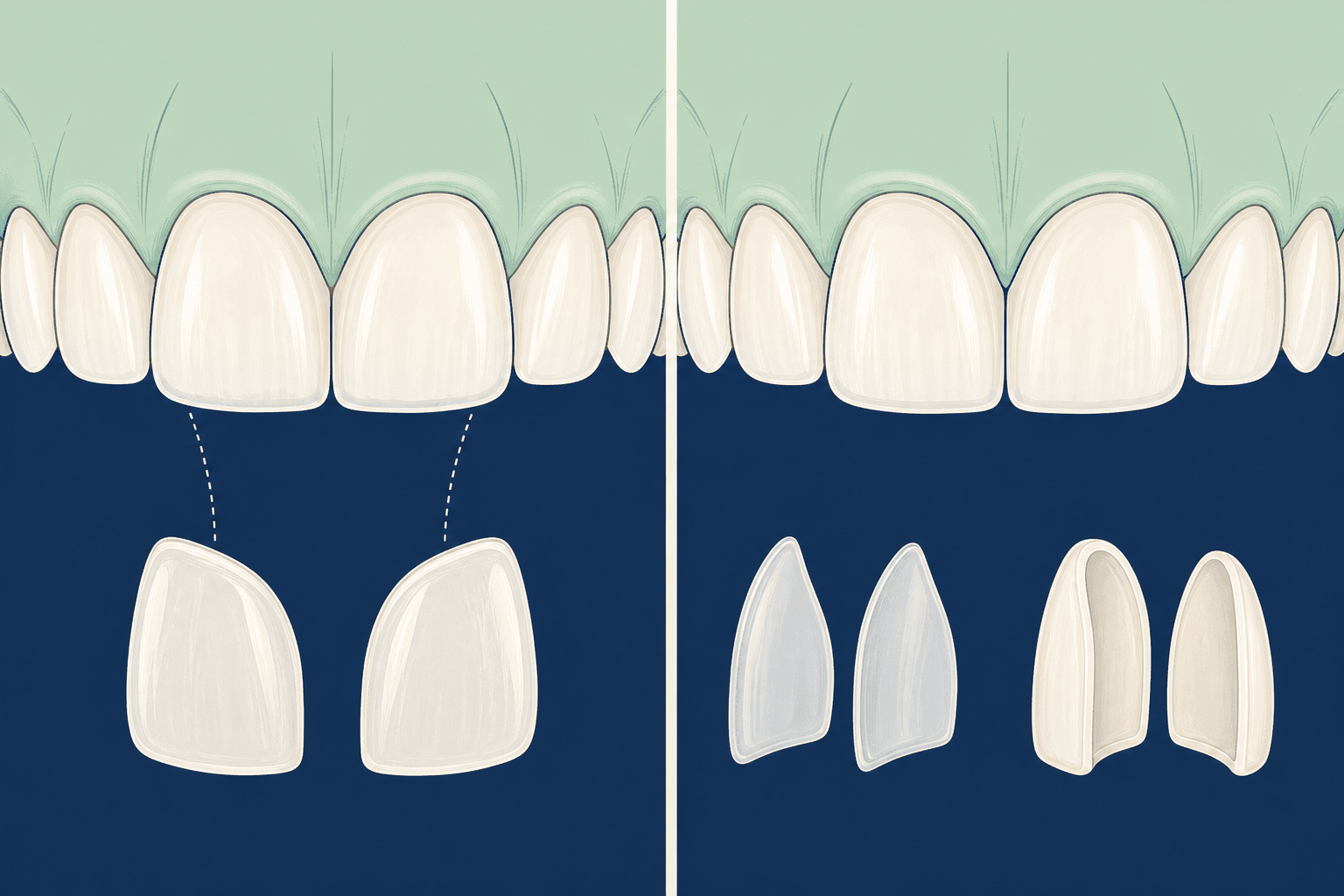
Composite, Lumineers, or porcelain veneers
Choose composite for easier repair and possible enamel savings; porcelain is stronger and resists staining and wear.
[1][2][3][4]The short answer
Composite veneers may preserve more enamel and are easier to repair, while porcelain veneers resist stains and wear better.
[1][3][2][4]
The two options, side by side
The DN Glow Up1,699 AED
Book The DN Glow UpWhich veneer type fits the trade-off?
| Option | Material or design | Useful distinction |
|---|---|---|
| Composite | Tooth-coloured filling material bonded to the tooth | May need less enamel removal and is easier to repair if damaged.[1][3][2][4] |
| Porcelain | Thin custom-made shell fitted to the front of the tooth | Strong, long-lasting and usually more expensive than composite.[1][3][2][4] |
| No-preparation ceramic | Conservative ceramic veneer technique | Requires careful case selection because long-term evidence is limited.[1][2][4] |
Choose composite if you value easier repair
Choose porcelain if strength matters most
Which option costs more?
Porcelain tends to be the higher-priced veneer material. Composite may reduce the number of visits, while a no-preparation ceramic approach has limited long-term clinical evidence.
[1][3][2][4]| Approach | What changes the decision |
|---|---|
| Composite | May need less enamel removal and fewer visits; it is easier to repair if damaged.[1][3][2][4] |
| Porcelain | It is stronger, long-lasting and usually more expensive than composite.[1][3][2][4] |
| No-preparation ceramic | It is conservative, but controlled clinical evidence has not established predictable long-term outcomes.[1][2][4] |