
Treatment comparison
Material for kids / root caries
Moderate chewing pressure suits composite, while resin-modified glass ionomer has stronger caries-prevention evidence in comparisons.
[1][2][3]The short answer
Composite fillings suit small to mid-size cavities under moderate chewing pressure, while resin-modified glass ionomer has shown stronger caries prevention in comparisons.
[1][2][3]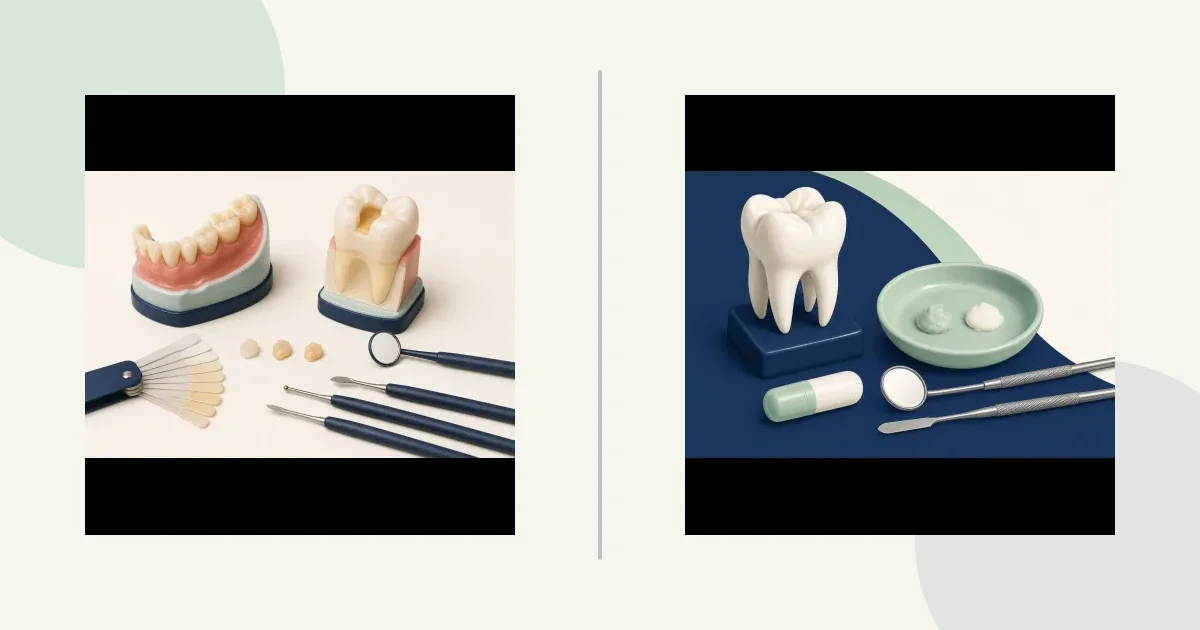
The two options, side by side
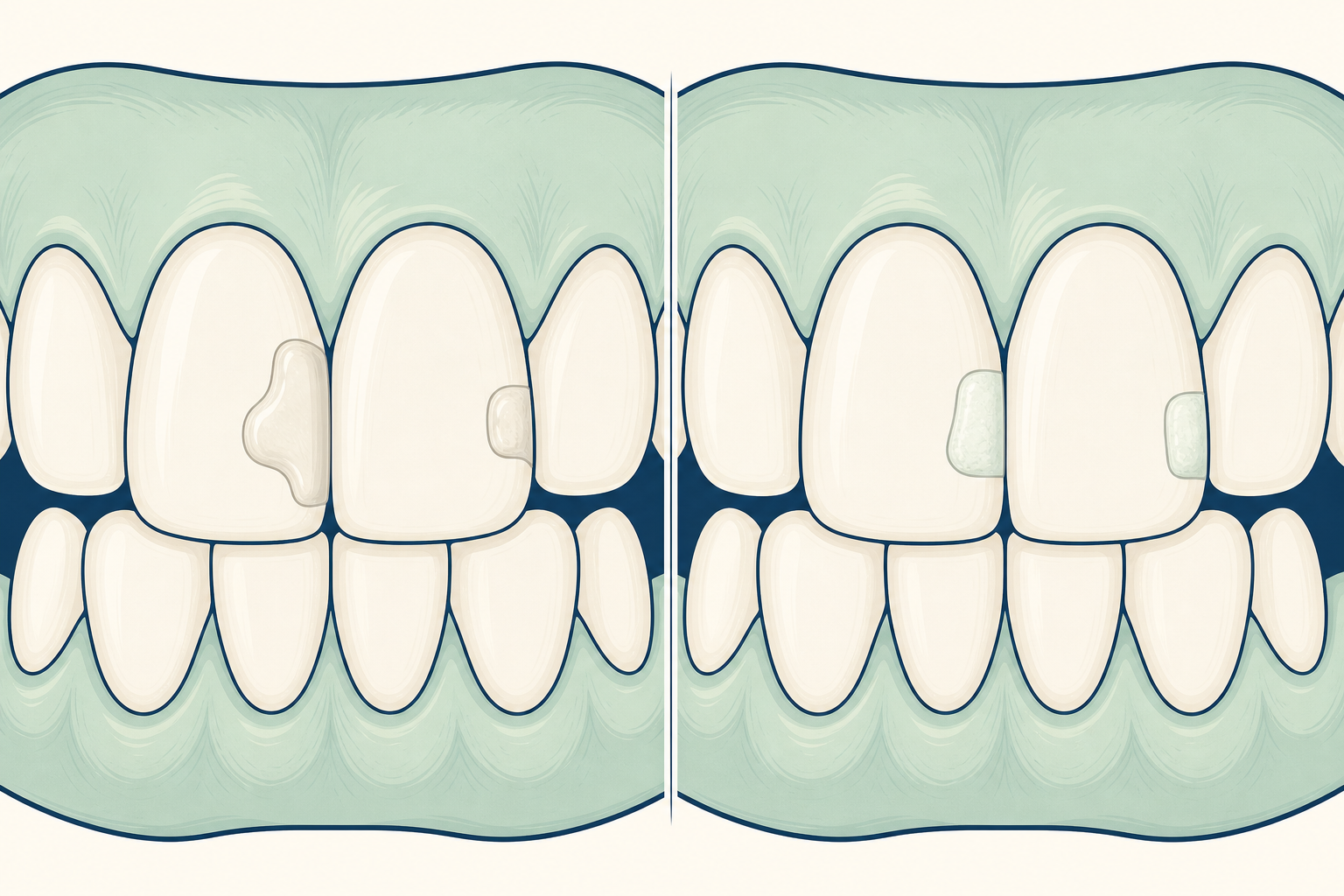
The DN First Look799 AED
Book The DN First LookWhich filling fits the main job?
| Material | Supported distinction |
|---|---|
| Composite | A tooth-coloured filling with good durability and fracture resistance for small to mid-size fillings under moderate chewing pressure.[2][3] |
| Resin-modified glass ionomer | A meta-analysis found it more caries preventive than composite resin, with or without fluoride.[1][2][3] |
When does composite make sense?
When does glass ionomer make sense?
Glass ionomer has a caries-prevention advantage in parts of the reviewed evidence. In permanent teeth, single-surface glass ionomer restorations had fewer caries lesions after six years than amalgam restorations, and resin-modified glass ionomer outperformed composite resin for caries prevention in a meta-analysis.
[1][2][3]