Dental Nation
Treatment comparison

Multiple gaps on a budget

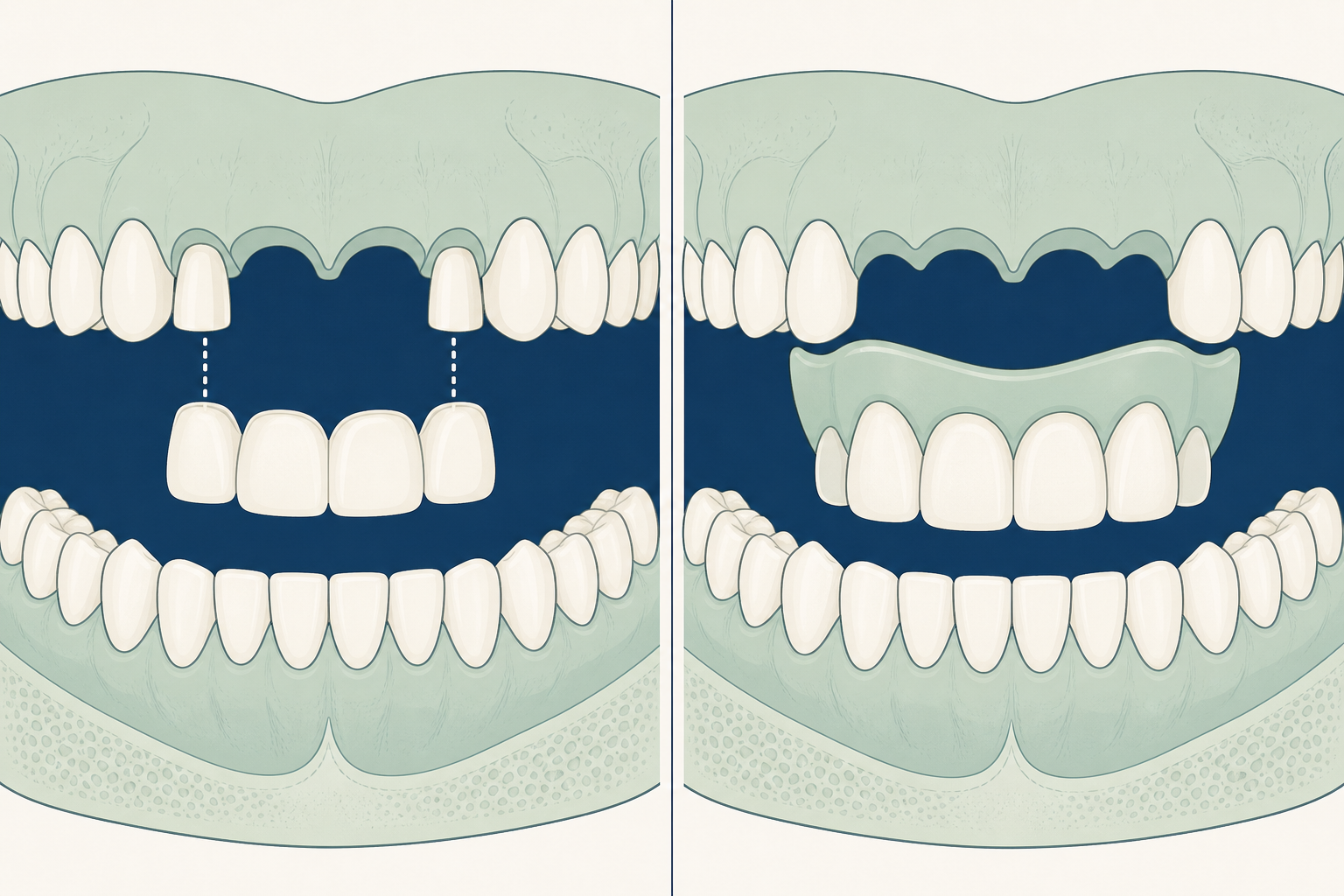
A bridge is fixed to neighbouring teeth, while a partial denture replaces gaps with a removable plate and replacement teeth.

[1][2]

The short answer

A bridge stays fixed to other teeth, while a partial denture is a removable plate that replaces one or more missing teeth.

[1][2]
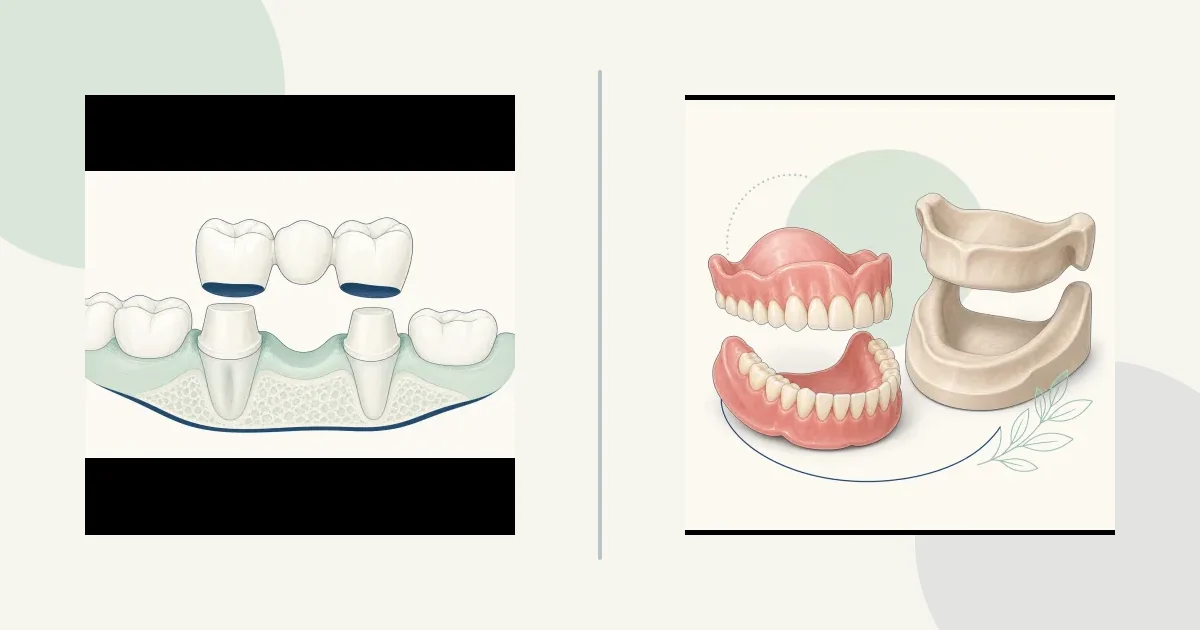
Multiple gaps on a budget comparison graphic

The two options, side by side

Illustrative diagram: bridges vs dentures
Illustration — a representative diagram, not a patient photo.
The DN First Look799 AED
Book The DN First Look

What is the difference between a bridge and a partial denture?

Fixed bridge and removable partial denture compared
FeatureBridgePartial denture
AttachmentFixed to other teeth in the mouth.Fits over the gum and is removable.[1][2]
ConstructionA fixed replacement for missing teeth.A plastic or metal plate, often with metal clasps.[1][2]

[1][2]

When does a fixed bridge answer the gap?

A bridge replaces missing teeth by spanning the gap and is attached to surrounding teeth for support. It cannot be removed at home.

[1][2]

When does a partial denture answer the gap?

A partial denture is made to fit snugly over the gum and replace one or more missing teeth. Its pink plastic flange can replace missing gum and bone after a tooth is removed.

[1][2]

What practical differences shape the choice?

The main practical distinction is whether the replacement stays attached to surrounding teeth or is removed from the mouth. A partial denture can have visible metal clasps depending on their position.

[1][2]

What can happen as a partial denture settles?

New dentures often create sore spots. A review is normally arranged one to two weeks after fitting so pressure areas and discomfort can be corrected.

[1][2]
Changes that can affect a partial denture
SituationLikely consequence
New denture causes mild sorenessSore areas can develop after fitting.[1][2]
Gums and bone change after extractionsAn immediate partial denture may become loose and later need relining or remaking.[1][2]

[1][2]

Which denture problems need attention?

A denture that clicks, slips, hurts, or is worn or damaged may no longer be fitting well. Red or bleeding gums and bad breath can be signs of gum disease, fungal infection, or tooth decay.

[1][2]

What is another replacement route?

Dental implants are fixed to the jawbone to replace tooth roots and can support crowns or some kinds of denture. They are another way to replace missing teeth.

[1][2]

What should the comparison focus on?

Focus on the support each replacement uses: a bridge relies on surrounding teeth, whereas a partial denture rests over the gum and is kept in place with its design and clasps.

[1][2]

Frequently asked questions

Can I take a bridge out to clean it?

No. A bridge is fixed to other teeth and can only be removed by a dentist.

[1][2]
Why might a new partial denture feel sore?

New dentures can create sore areas; a follow-up appointment is normally arranged one to two weeks after fitting to correct pressure spots or discomfort.

[1][2]