Dental Nation
Treatment comparison

Braces to straighten or veneers to mask

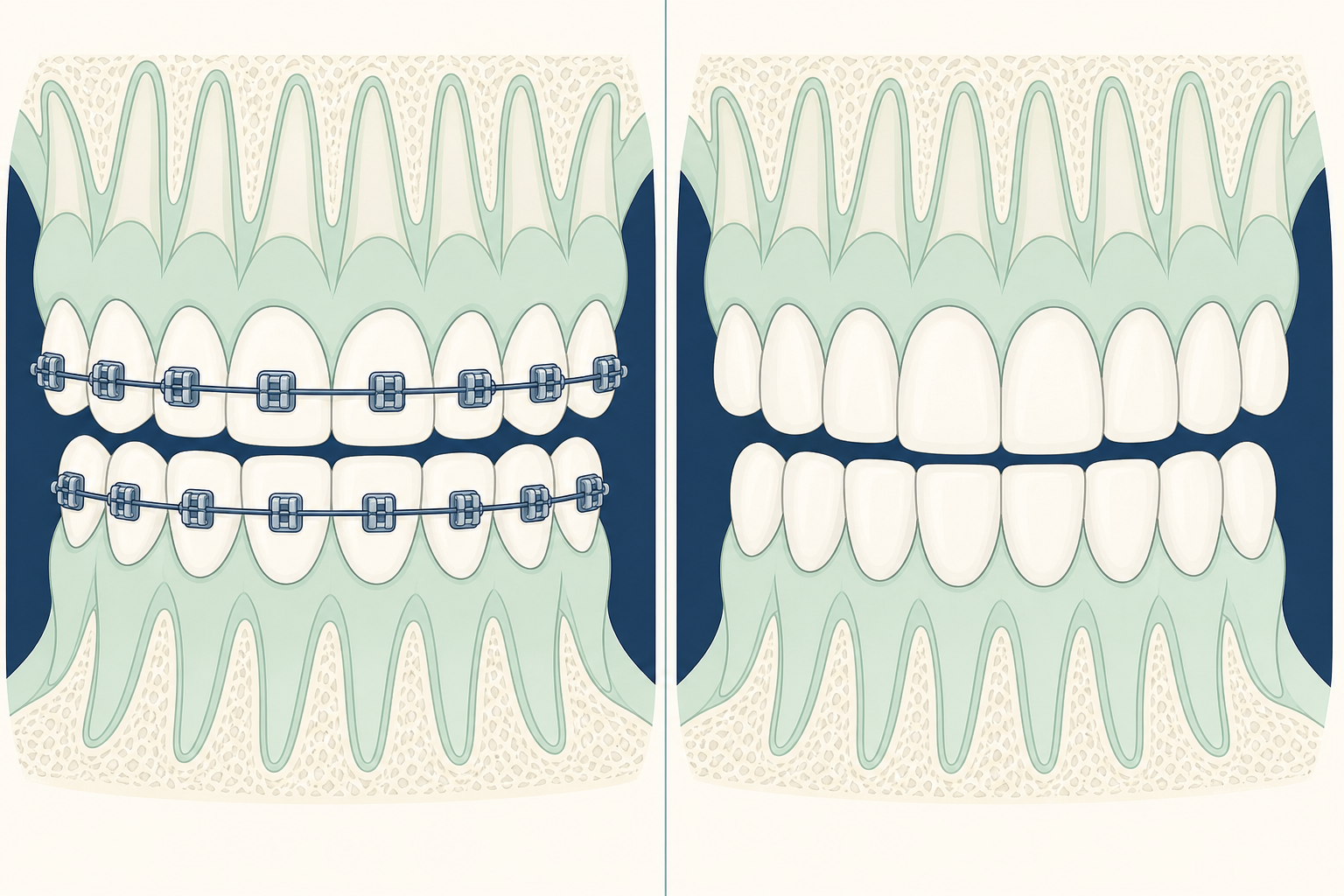
Braces use pressure over time to straighten teeth; veneers bond to the front surface to change the look of chipped, stained, crooked, or misshapen teeth.

[1][2]

The short answer

Braces straighten teeth with sustained pressure, while veneers are bonded to the front surface to change the appearance of chipped, stained, crooked, or misshapen teeth.

[1][2]
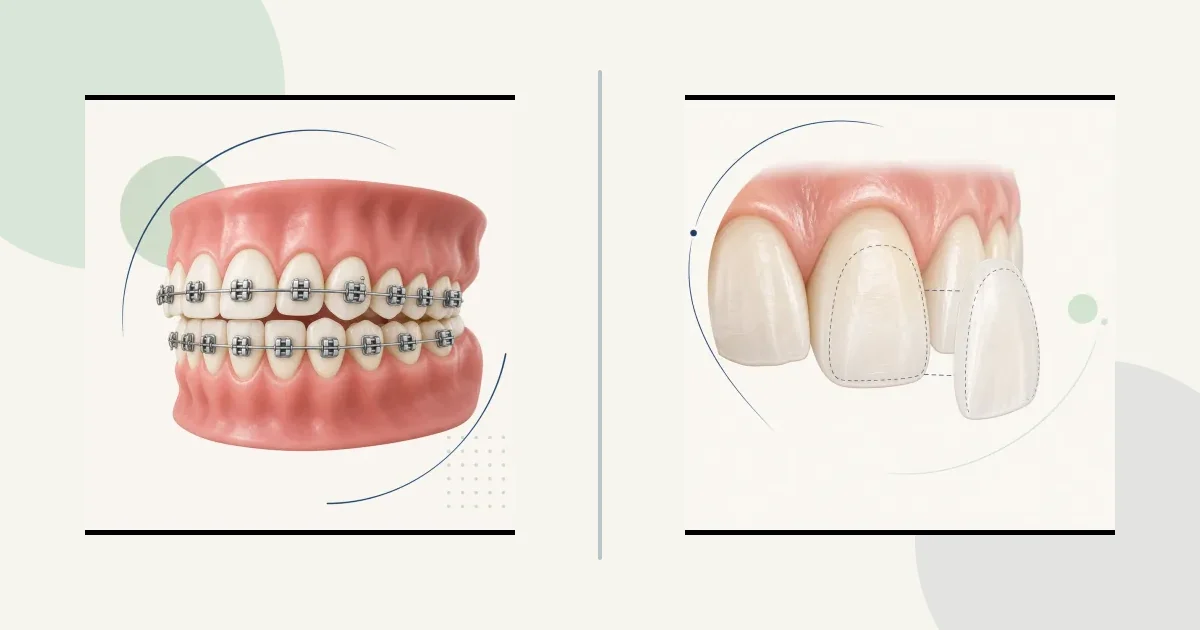
Same decision, braces phrasing comparison graphic

The two options, side by side

Illustrative diagram: braces vs veneers
Illustration — a representative diagram, not a patient photo.
The DN Glow Up1,699 AED
Book The DN Glow Up

Do you want the teeth straightened or their visible surface changed?

The basic difference between braces and veneers
OptionMain action
BracesBrackets and wires put pressure on teeth so they gradually move.[1][2]
VeneersA porcelain or composite covering is bonded to the tooth's front surface.[1][2]

[1][2]

When do braces answer the problem?

Braces are used to gradually move teeth and can include elastic bands for extra force to help correct the bite.

[1][2]

When do veneers answer the problem?

Veneers can mask chips, breaks, staining, crookedness, misshapen teeth, and gaps. They cover the front, rather than the entire tooth structure.

[1][2]

Which veneer material changes the cost?

Porcelain veneers tend to be the more expensive choice. Composite veneers may require fewer visits and less enamel removal.

[1][2]
Two veneer materials
OptionPractical distinction
PorcelainCustom-made, strong, long-lasting, and usually more expensive.[1][2]
CompositeMade from tooth-coloured filling material and easier to fix if damaged.[1][2]

[1][2]

What needs maintenance after braces?

After braces are removed, a retainer is needed to stop teeth moving back towards their original position.

[1][2]

What practical risks should you know?

Hard and sticky foods can damage braces. Porcelain veneer placement removes a small amount of enamel from the front and sides of the tooth.

[1][2]

When is a veneer not a substitute for a crown?

A veneer covers only the front surface. A crown covers the whole tooth structure, so a veneer does not perform the same covering role.

[1][2]

What question decides between them?

The key distinction is whether the desired change is tooth position or visible surface appearance. Braces move teeth; veneers alter the front-facing surface.

[1][2]

Frequently asked questions

Do veneers cover the whole tooth?

No. Veneers cover the front surface, whereas a crown covers the entire tooth structure.

[1][2]