Dental Nation
Treatment comparison

Pediatric crowding (often confused by parents)

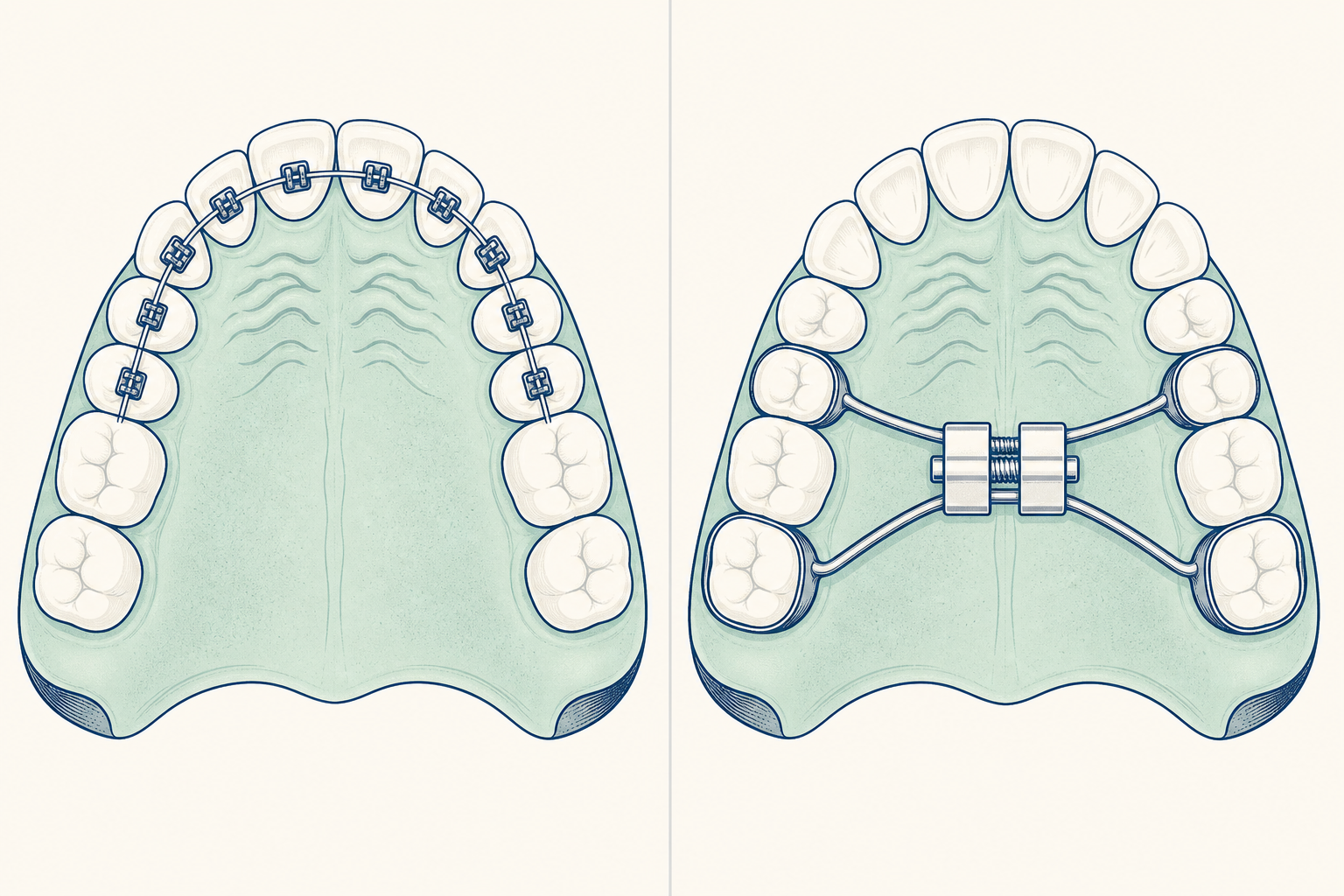
For children with jaw crowding, an expander widens the upper jaw, while braces gradually move teeth into place.

[1][2]

The short answer

An expander widens the upper jaw, whereas braces use brackets and wires to gradually move teeth.

[1][2]
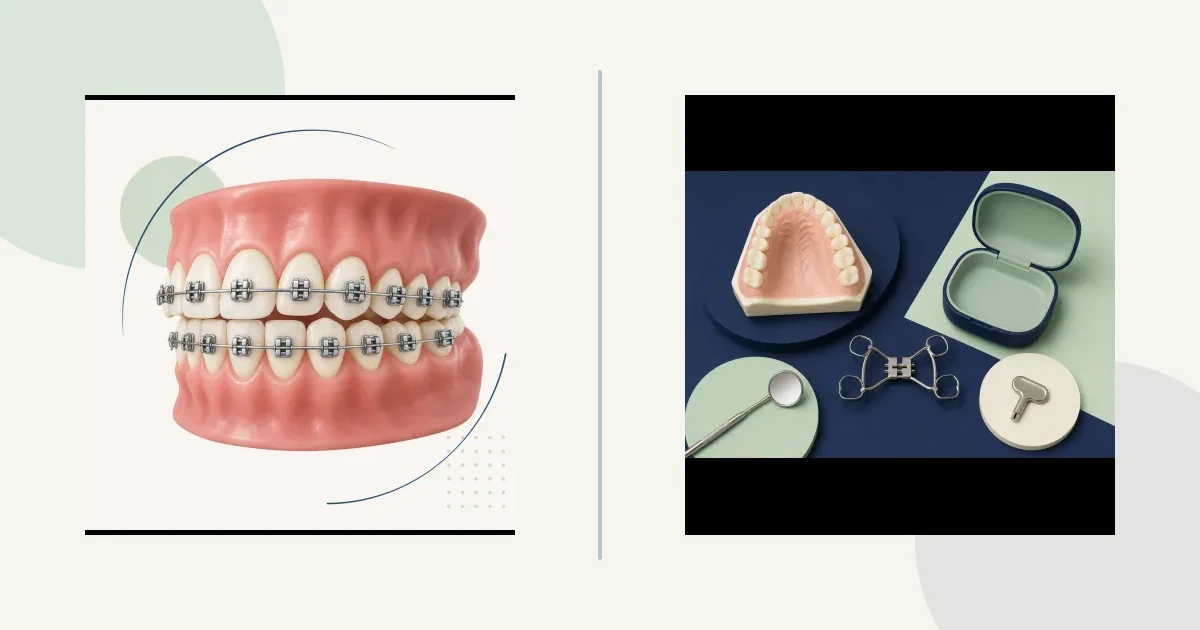
Pediatric crowding (often confused by parents) comparison graphic

The two options, side by side

Illustrative diagram: braces vs palatal expanders
Illustration — a representative diagram, not a patient photo.
The DN Scan499 AED · fully deducted if treatment starts within 30 days
Book The DN Scan

What does each appliance change?

How the appliances act
AppliancePosition or partsAction
Palatal expanderAcross the roof of the mouth, attached to upper back teethGradually widens the upper jaw[1][2]
Traditional bracesBrackets and wires fixed to teethApply pressure that gradually moves teeth[1][2]

[1][2]

When can an expander be useful for a child?

Around age seven, a child commonly has both baby and permanent teeth. An expander can be part of interceptive treatment while the jaw grows when there is excessive crowding, a crossbite, or concern about an impacted tooth.

[1][2]

When do braces address the problem?

Braces are used to guide teeth towards better positions and can help correct a bite. Elastic bands may provide extra force, while an expander or another appliance may be added when the mouth also needs a different type of correction.

[1][2]

How do expander designs differ?

One expander design is widened by turning a small screw. Another uses built-in springs or wires and does not need turning; both sit across the palate and work by gradually guiding the jaw and teeth.

[1][2]
Expander adjustment methods
DesignHow it is adjusted
Screw-adjusted expanderA small screw is turned to gradually widen the upper jaw[1][2]
Spring or wire expanderBuilt-in springs or wires work without turning[1][2]

[1][2]

What care do braces need?

Brush braces with a soft-bristled toothbrush and fluoride toothpaste. A water flosser or proxy brush can help reach tight areas, and softer foods protect the hardware because hard or sticky foods can damage braces.

[1][2]

Does a new expander hurt?

A new expander can feel uncomfortable while a child adjusts to it. That discomfort is usually minimal and short-lived; expanders have been used for decades to treat orthodontic problems and are considered safe and effective with proper care.

[1][2]

When might neither be the same choice?

Expansion approaches for adults differ from those used in growing patients. In younger children, an expander or partial braces can correct certain problems while the jaw grows and may make later full-brace treatment easier or shorter.

[1][2]

What findings shape the choice?

The choice begins with how permanent teeth are coming in and whether there is a jaw relationship problem such as crossbite, excessive crowding, or an impacted tooth. Those findings distinguish a need to widen the upper jaw from a need to move teeth.

[1][2]

Frequently asked questions

Does every palatal expander need a key?

No. Some expanders use built-in springs or wires instead of a screw that is turned.

[1][2]
Can braces and an expander be used together?

Yes. Braces can move teeth while a palatal expander is one of the additional appliances used when it is needed.

[1][2]