Dental Nation
Treatment comparison

Braces, Invisalign, or veneers

Braces and clear aligners move teeth, while veneers cover the front surface to change colour or shape.

[1][2][3]

The short answer

Braces and clear aligners move teeth into position, while veneers cover the front surface to change tooth appearance.

[1][2][3]
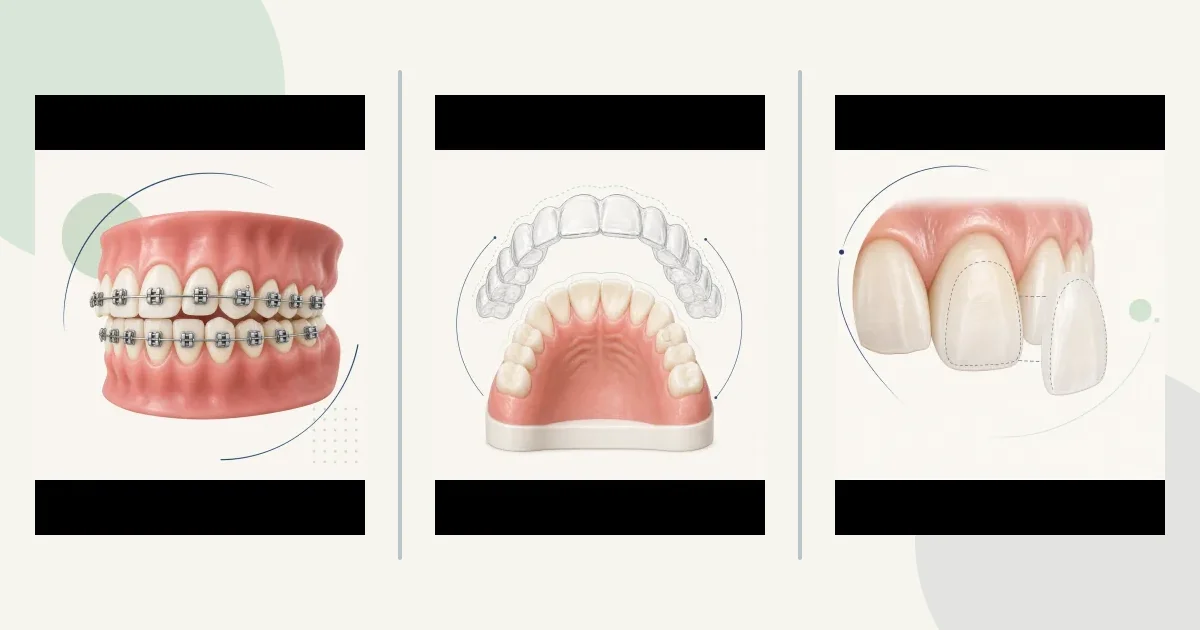
Crooked-teeth master decision; heavy honesty content comparison graphic

The two options, side by side

Illustrative diagram: braces vs invisalign vs veneers
Illustration — a representative diagram, not a patient photo.
The DN Glow Up1,699 AED
Book The DN Glow Up

What does each option change?

Orthodontic and cosmetic options
OptionPrimary actionMain purpose
BracesMove teeth with brackets and wiresCorrect tooth position[1][2][3]
Clear alignersMove teeth with a series of removable traysStraighten teeth discreetly[1][2][3]
VeneersCover the front of teethChange colour, shape or appearance[1][2][3]

[1][2][3]

Orthodontic and cosmetic options: at a glance
OptionPrimary actionMain purpose
BracesMove teeth with brackets and wiresCorrect tooth position[1][2][3]
Clear alignersMove teeth with a series of removable traysStraighten teeth discreetly[1][2][3]
VeneersCover the front of teethChange colour, shape or appearance[1][2][3]

[1][2][3]

When do braces fit the goal?

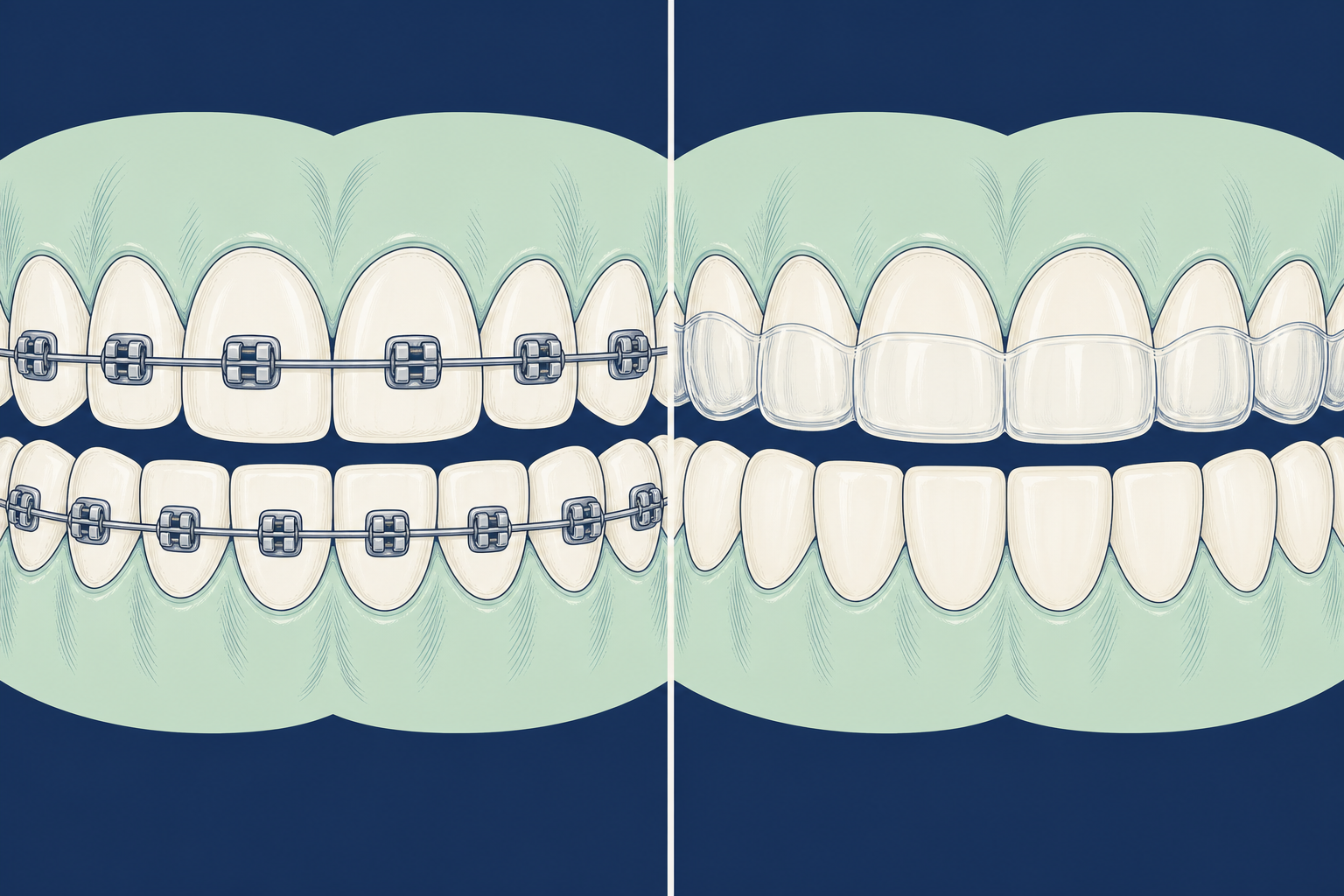
Braces are attached to the teeth throughout treatment and can treat a wide range of malocclusions, including severe bites and crooked teeth. They tend to work faster than other treatments but remain visible.

[1][2][3]

When do clear aligners fit?

Clear aligners are nearly invisible plastic shells that apply gentle pressure to reposition teeth. They can be removed to eat and brush, but usually treat light to moderate alignment problems and can be lost.

[1][2][3]

What changes the price?

Porcelain veneers are generally the more expensive veneer option. Composite veneers can require less enamel removal and fewer visits, while braces and aligners are a course of orthodontic tooth movement rather than a veneer restoration.

[1][2][3]

What does each option need afterwards?

Braces stay attached for the duration of treatment, while aligners are removable each day. Veneers are bonded to the tooth and can chip, crack, wear down or loosen over time, when they may need re-bonding, repair or replacement.

[1][2][3]

What are the main trade-offs?

Hard and sticky foods can damage braces. Porcelain veneer placement removes a small amount of enamel from the front and sides of the tooth, and veneers can later chip, crack, wear or loosen.

[1][2][3][4]

When are veneers not the answer?

Veneers change the visible front surface of a tooth but do not reposition it. A veneer is a thin porcelain shell or tooth-coloured composite bonded to the front of the tooth.

[1][2][3]

How should the decision be framed?

Begin with the change you want: braces or aligners move teeth, whereas veneers alter the visible front surface. Braces cover a wider range of bite and crooked-tooth problems; removable aligners usually suit light to moderate alignment issues.

[1][2][3]

Frequently asked questions

Can veneers straighten crowded teeth?

No. Veneers change the visible tooth surface; braces and clear aligners are the options in this comparison that move teeth.

[1][2][3]