
Metal braces, ceramic braces, or Invisalign
Metal and ceramic braces use fixed brackets and wires; clear aligners use shells that move teeth with gentle pressure.
[1][2][3]The short answer
Metal braces use brackets and wires, ceramic braces use tooth-coloured brackets, and clear aligners use plastic shells.
[1][2][3]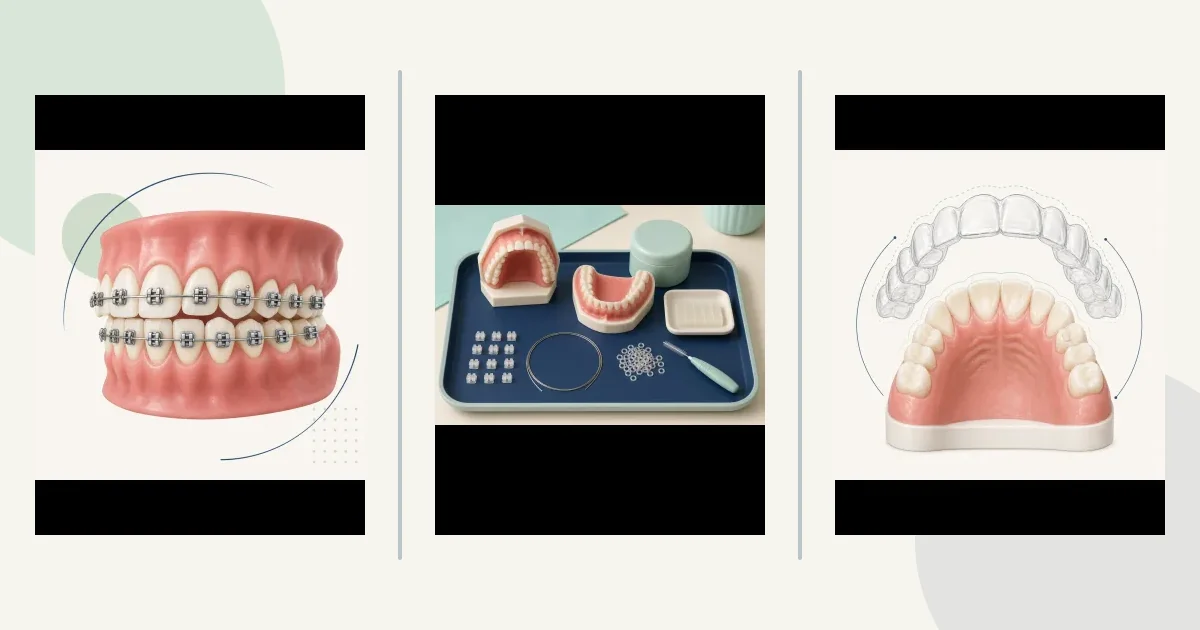
The two options, side by side
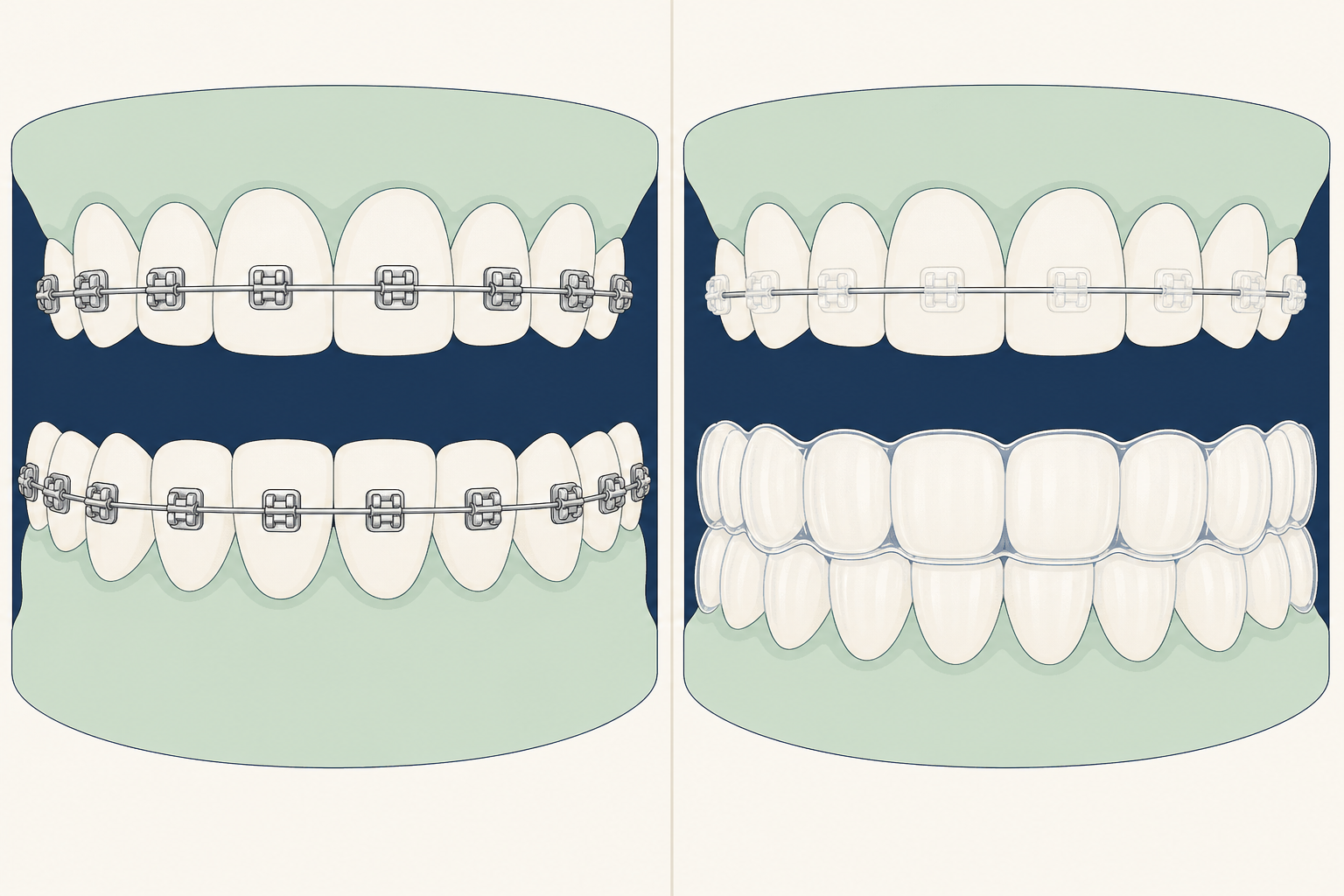
Which orthodontic option is visible?
Choose fixed braces for bracket-and-wire control
Choose aligners for a discreet shell
What affects orthodontic cost?
Private brace cost varies with the complexity of the dental problem and the type of braces fitted. Adults usually pay privately in the NHS system.
[1][2][3]What does each system require during treatment?
What problems can occur?
Hard and sticky foods can damage braces. A broken wire or bracket needs prompt orthodontic guidance, and wax can cover a sharp edge temporarily. Clear aligners commonly cause mild discomfort for the first few days, with an adjustment period of about a week. The discomfort is temporary and may be relieved by rinsing with warm salt water.
[1][2][4]When might aligners not be suitable?
What should decide between them?
The comparison should account for the movement and bite correction required, whether a fixed or removable system is practical, visibility, and the complexity of the problem. Brackets and wires apply pressure to move teeth, and elastics may add force for tooth movement and bite correction. Clear aligners snap over teeth and reposition them gradually with gentle pressure.
[1][2][3]