Dental Nation
Treatment comparison

Last attempt to save vs remove

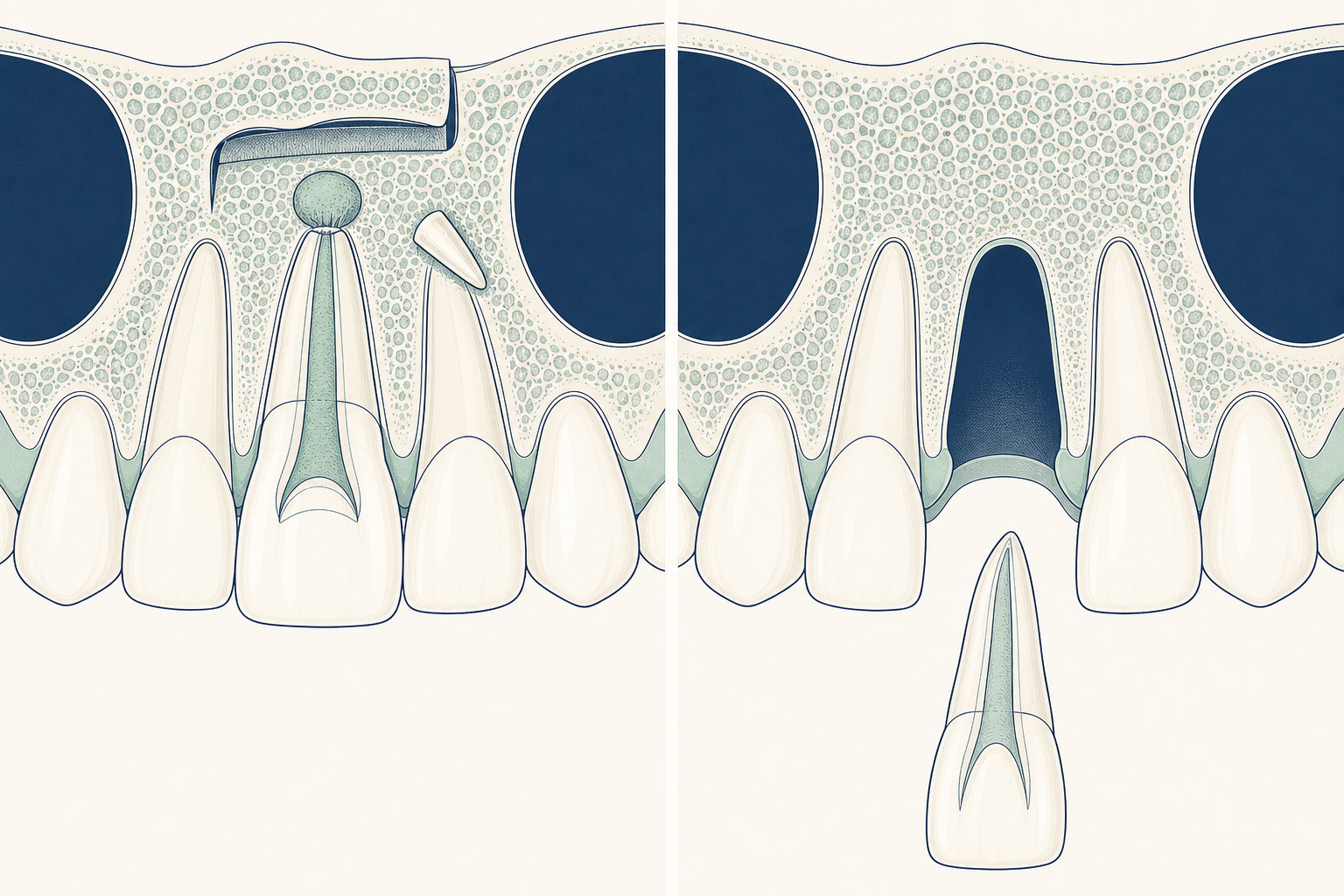
Extraction removes the infection source; apical surgery tries to keep the tooth after other saving options have run out.

[1][2]

The short answer

Extraction removes the whole tooth and its infection source, while apical surgery may be used when other ways to save that tooth have been exhausted.

[1][2]
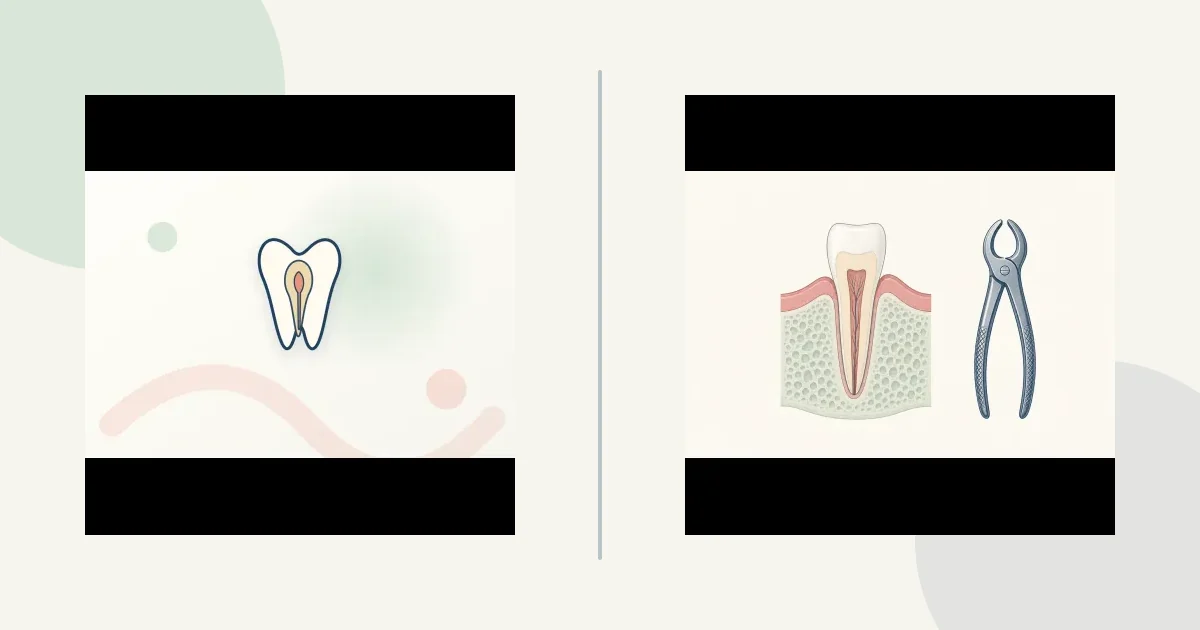
Last attempt to save vs remove comparison graphic

The two options, side by side

Illustrative diagram: apicoectomy vs tooth extraction
Illustration — a representative diagram, not a patient photo.
The DN First Look799 AED
Book The DN First Look

Which option deals with the infected root?

The immediate difference between the procedures
OptionWhat happens
Apical surgeryThe gum is opened, infected tissue and the root tip are removed, and the cut root is sealed.[1][2]
ExtractionThe whole tooth is removed, taking away the cause of the infection.[1][2]

[1][2]

When might saving the tooth be considered?

Apical surgery is commonly considered after other tooth-saving options have been exhausted. Its outcome varies with the tooth's condition and the treatment already carried out.

[1][2]

When does removal answer the problem directly?

Removing the whole tooth removes the cause of the infection. Leaving an infected root in place can allow infection to spread.

[1][2]

What can change the treatment decision?

Repeating the root filling is another option, but it may not be possible when a crown with a post has been placed over the tooth.

[1][2]
Factors stated for the available paths
PathRelevant detail
Repeat root fillingIt may be impossible if a crown with a post is already over the tooth.[1][2]
Apical surgerySuccess varies with the condition of the tooth and previous treatment.[1][2]

[1][2]

How predictable is apical surgery?

Apical surgery is often undertaken only after earlier attempts to save the tooth have failed. That history and the tooth's condition make the result variable.

[1][2]

What are the specific surgical risks?

In the lower jaw, sensory-nerve injury can cause numbness or tingling in the lower lip and tongue. Recovery may take several weeks, and the numbness is rarely permanent.

[1][2]

When is leaving the infected root unsuitable?

An infected root left in place can allow infection to spread. The recorded alternatives are repeat root filling, apical surgery, or removing the whole tooth.

[1][2]

What separates the options?

The choice turns on whether the tooth can still be saved, whether repeat root filling is possible, and the condition created by previous treatment.

[1][2]

Frequently asked questions

Can a root filling be repeated instead?

Repeat root filling is an alternative, although a crown with a post can make it impossible.

[1][2]