Dental Nation
Treatment comparison

Failed root canal next step

After a failed root canal, options include retreatment through the tooth or surgery that removes the root tip and seals it.

[1][2]

The short answer

After a failed root canal, retreatment works through the tooth again, while apicoectomy removes the root tip and seals it surgically.

[1][3]
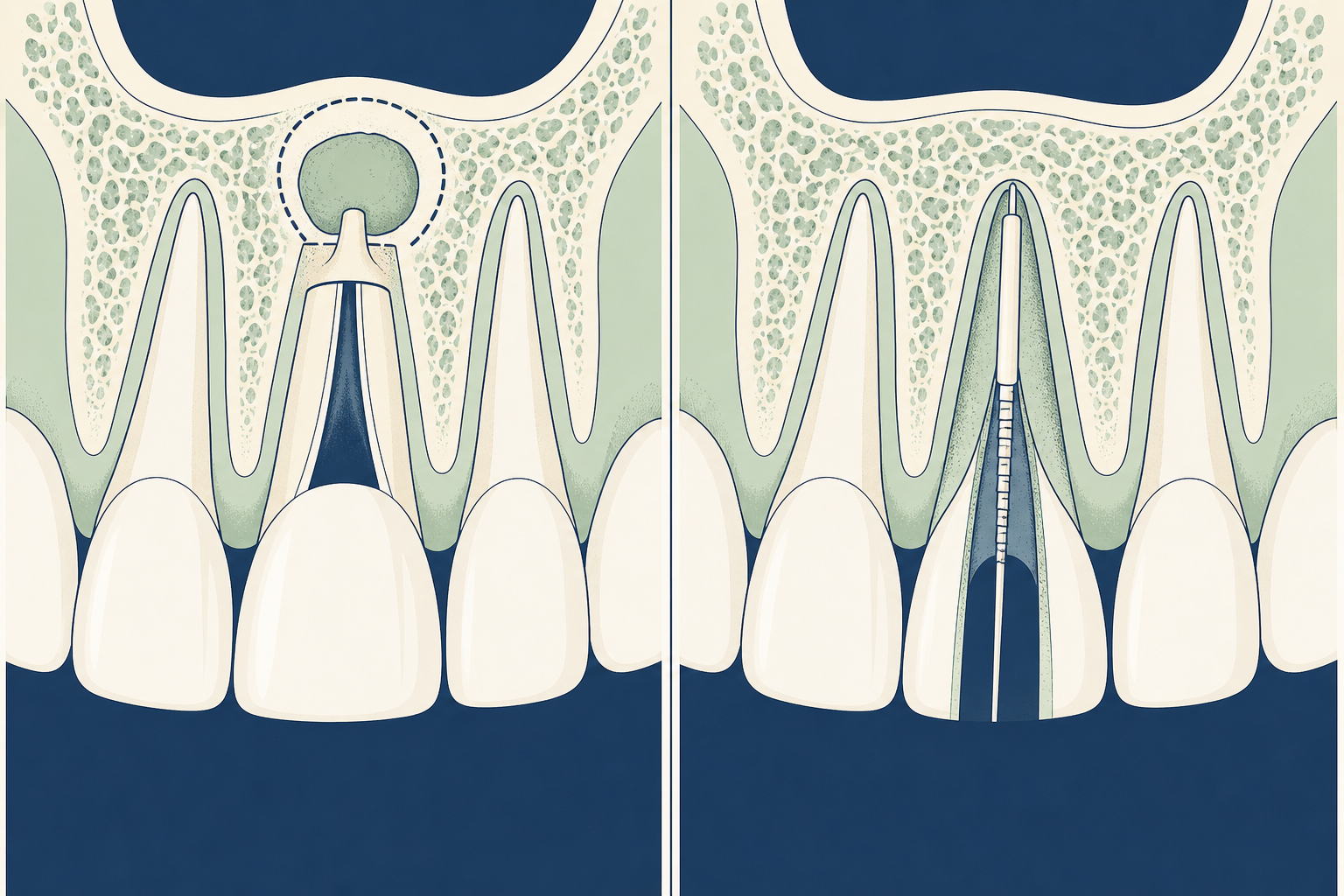
Failed root canal next step comparison graphic

The two options, side by side

Illustrative diagram: apicoectomy vs root canal retreatment
Illustration — a representative diagram, not a patient photo.
The DN First Look799 AED
Book The DN First Look

How do apicoectomy and root canal retreatment differ?

Two approaches after root canal failure
OptionRouteKey step
Nonsurgical retreatmentThrough the tooth and root canalThe canal is treated again[1][2]
ApicoectomySurgical root-end routeThe root apex is removed and sealed from the end[1][3]

[1][2][3]

What happens in nonsurgical retreatment?

Retreatment is one option after failed primary root canal therapy. Root canal treatment works by opening the tooth, removing infected pulp, cleaning and shaping the inside, then filling and sealing it.

[1][2]

What happens in an apicoectomy?

Endodontic surgery is the other recovery route after persistent disease or root canal failure. It removes the root apex and closes the root canal from the surgical end.

[1][3]

What affects the amount of treatment involved?

A root canal course usually takes two or more appointments lasting one to two hours or sometimes longer. A temporary filling may sit between visits, and a crown may be needed when the tooth was badly infected.

[1][2]
Treatment details for the nonsurgical route
DetailWhat can happen
ComfortLocal anaesthetic is usually used[1][2]
AppointmentsTwo or more, often one to two hours or longer[1][2]

[1][2]

What does the short-term evidence show?

The systematic review found that surgical retreatment appeared more favourable for healing over the short two-year period. The review also noted a small number of participants, which limits how firmly that finding can be applied.

[1][2]

What can cause treatment failure?

Reported failures included underfilling, overfilling, poorly condensed canal filling, broken instruments and loss of the coronal seal. Vertical root fracture was also identified as a major cause of failure after surgical endodontic treatment.

[1][2]

When are these two routes the relevant alternatives?

A persistent endodontic lesion or a failed root canal creates the comparison between nonsurgical retreatment and endodontic surgery. Both aim to recover the tooth rather than move directly to a different replacement route.

[1][3]

What is the key decision point after failure?

The question is whether to retreat the canal through the tooth or approach the root end surgically. These are separate approaches studied for persistent disease and failure after primary root canal therapy.

[1][3]

Frequently asked questions

Is an apicoectomy the same as repeating root canal treatment?

No. Retreatment works through the canal again, while apicoectomy removes the root tip and seals from the surgical end.

[1][3]