Dental Nation
Treatment comparison

Silver vs white fillings

Composite fillings match tooth colour and can cost more than amalgam; some people should avoid amalgam because of mercury-related risk factors.

[1][2]

The short answer

Composite resin is a tooth-coloured filling that can be used on front or back teeth. It provides durability and fracture resistance in small to mid-size fillings under moderate chewing pressure. Amalgam is a metal filling whose mercury-related precautions matter for some patients.

[1][2]

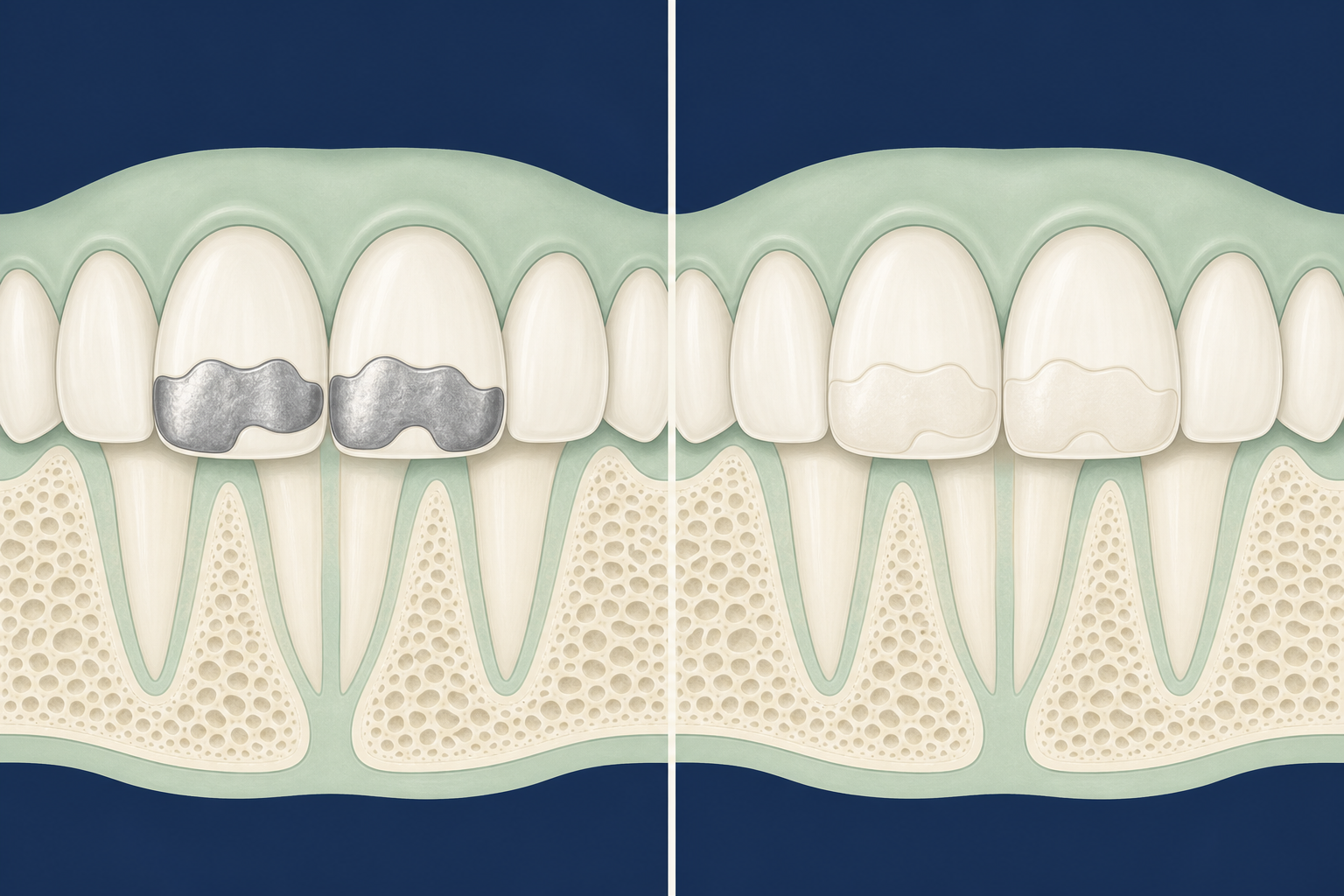
Silver vs white fillings comparison graphic

The two options, side by side

Illustrative diagram: amalgam fillings vs composite fillings
Illustration — a representative diagram, not a patient photo.
The DN First Look799 AED
Book The DN First Look

What is the practical difference?

How the filling materials differ
FeatureCompositeAmalgam
AppearanceTooth-coloured and designed to blend with natural teethA metal filling material[1][2]
PlacementThe tooth must stay clean and dry while it is placedComposite generally takes longer to place than a metal filling[1][2]

[1][2]

Choose composite when appearance matters

Composite resin is the white option for people who want a filling to blend with the tooth colour. It can be used on front or back teeth and has good durability and fracture resistance in small to mid-size fillings under moderate chewing pressure.

[1][2]

Consider amalgam with its material precautions in view

People with allergy or heightened sensitivity to mercury, silver, copper, or tin should not receive amalgam. People who are pregnant, planning pregnancy, nursing, younger children, and people with neurological disease or impaired kidney function are among groups encouraged to use non-amalgam restorations where appropriate.

[1][2]

Which filling can cost more?

Composite fillings cost more than amalgam and may not be covered by some insurance plans. Their placement takes longer because the tooth has to be kept clean and dry while the cavity is filled.

[1][2]
Why the two filling options differ in cost and time
FactorCompositeAmalgam
Relative costCosts more than amalgamThe lower-cost comparison material[1][2]
Placement conditionNeeds a clean, dry tooth during filling placementMetal filling is quicker to place than composite[1][2]

[1][2]

How durable are the materials?

No filling lasts forever. Composite has good fracture resistance for small to mid-size fillings, but some studies find it less durable than amalgam and more likely to need replacement over time.

[1][2]

What risks and limitations matter?

Amalgam can cause oral lesions or sensitivity reactions in people allergic or sensitive to its metal components. Composite can be unsuitable for people with a relevant hypersensitivity, and it can require replacement more often than amalgam in some studies.

[1][2]

When is prevention the better option?

Preventing cavities avoids the need for either filling material. Brushing twice daily with fluoride toothpaste, flossing daily, eating a balanced diet, and regular dental visits reduce the risk of cavities and other dental disease.

[1][2]

What should guide the material choice?

Compare the tooth's location and chewing pressure, the desired appearance, the need to keep the tooth dry during placement, insurance cover, and any allergy, kidney, neurological, pregnancy, nursing, or age-related precaution relevant to amalgam.

[1][2]

Frequently asked questions

Why does a composite filling take longer to place?

The tooth needs to be kept clean and dry while the cavity is filled with composite, which usually makes placement longer than for a metal filling.

[1][2]