
All-on-4, single implants, or dentures
Replace a full arch with All-on-4, an individual gap with an implant, or missing teeth with removable dentures.
[1][2]The short answer
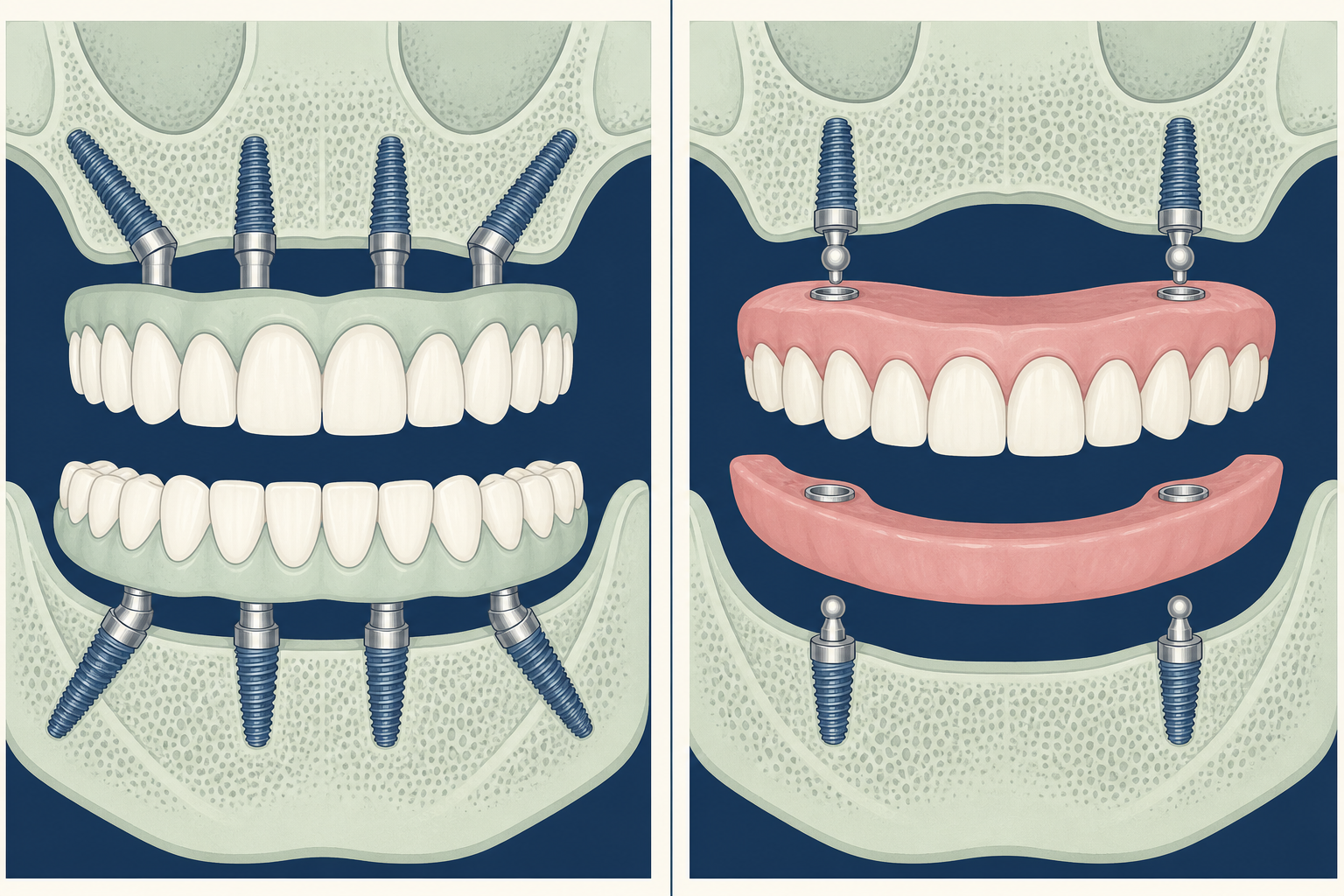
All-on-4 treats a full arch, single implants replace individual teeth, and dentures are removable replacements.
[1][2]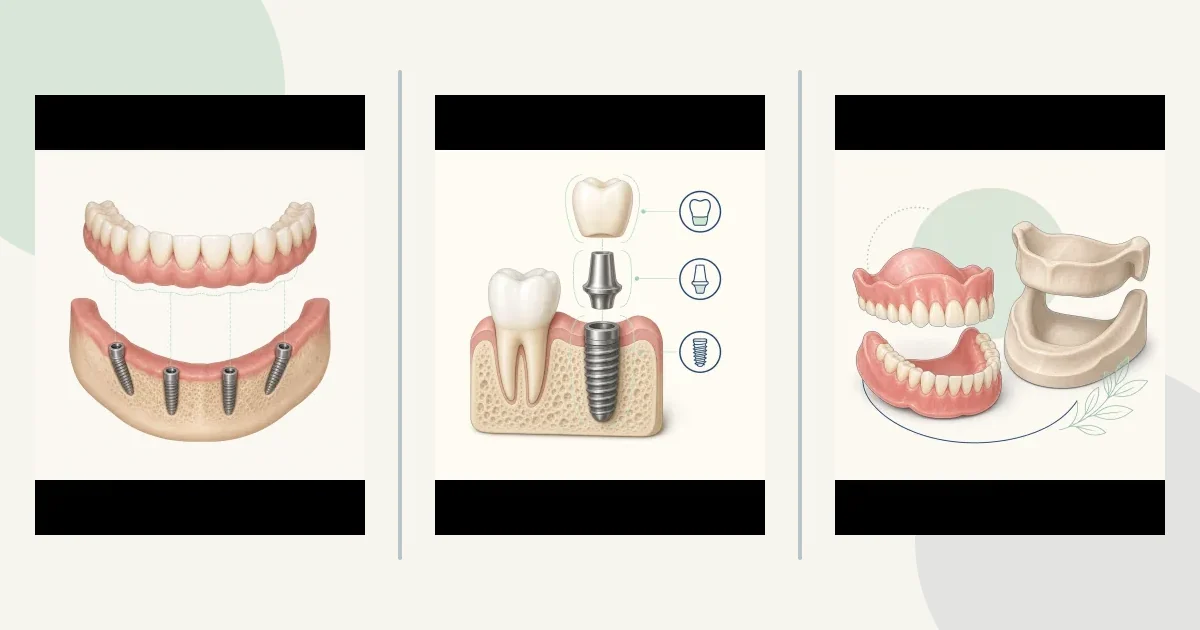
The two options, side by side
Which replacement matches the gap?
| Option | Best describes | Important point |
|---|---|---|
| All-on-4 | Full-arch restoration on four implants | Can treat an atrophic jaw without regenerative procedures[2][1] |
| Single implant | Replacement for a missing tooth | The implant must join properly with jaw bone[2][1] |
| Dentures | Removable replacement teeth | A different denture design may be an alternative[2] |
Choose All-on-4 when a full arch is the issue
Choose single implants for individual gaps
What changes the treatment burden?
How long can implants function?
What can go wrong?
An implant may not join properly with the jaw bone, and an implant component can loosen or wear over time. Smoking raises the risk of failed joining. A review of All-on-4 reported biological complications such as peri-implantitis in some patients after an average two-year follow-up, with limited follow-up data and possible bias in the studies.
[2][1]When might implants not be the answer?
Some people may choose no treatment, another denture design, or preparation of other teeth for crowns or bridges instead of the listed implant options.
[2]What should the decision include?
The decision turns on whether the gap is individual or full-arch, whether regenerative procedures are acceptable, and whether the bone is likely to support an implant. For an atrophic jaw, the all-on-four concept can avoid regenerative procedures that add morbidity and treatment fees. Implant parts can also loosen or wear with time, so the restoration needs ongoing attention.
[1][2]